
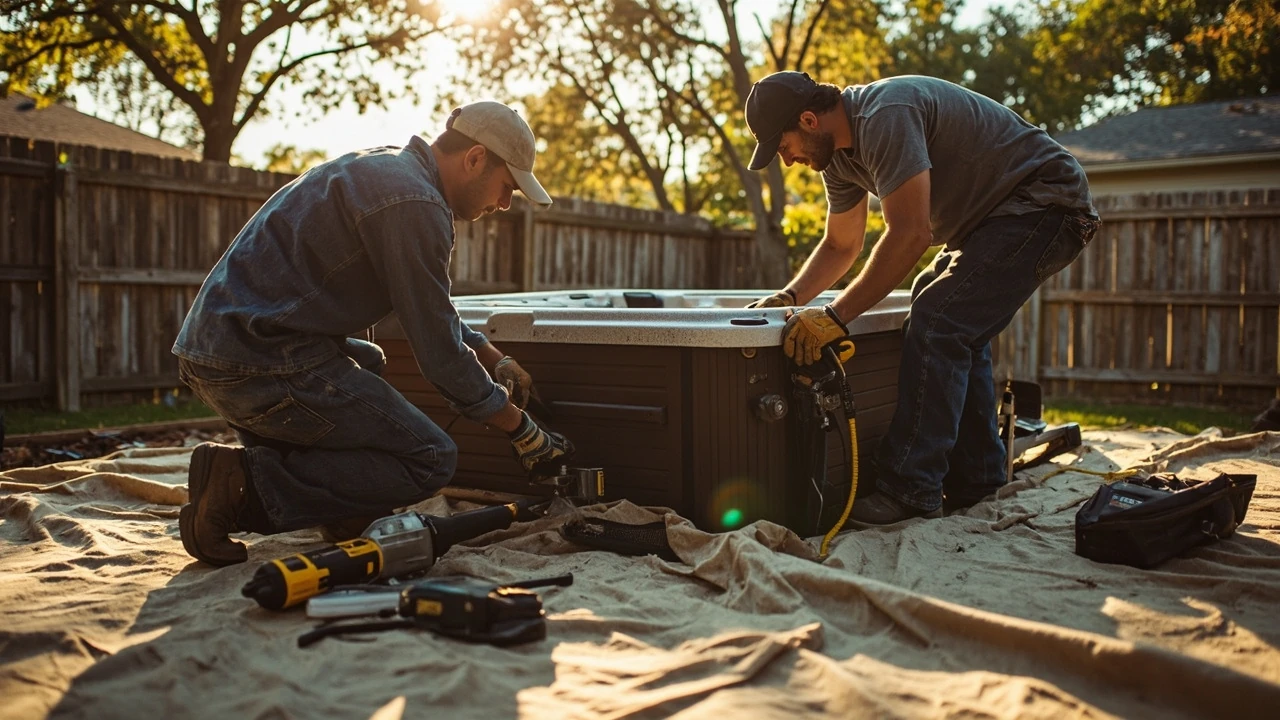
Hot tub removal: what homeowners actually face
An empty hot tub on a back patio is one of those projects that looks small until you stand next to it. A typical acrylic spa, fully plumbed and wired, weighs between 500 and 1,000 pounds empty, and far more when it is still full of water. That is before you add the concrete pad beneath it, the dedicated electrical run, and the deck framing that may have been built around the shell. The decision to move forward with hot tub removal usually arrives after the unit stops heating efficiently, the cover has finally given up, or the family has simply stopped using it.
What follows is a practical walk-through of how the work actually happens: how the unit is disconnected, what it weighs and how it is broken down, what the realistic cost range looks like, and the choices a homeowner can make between a full DIY effort, a partial teardown, or a hired crew. The goal is to give you a clear plan so the project does not become a multi-week saga of a half-dismantled tub sitting in the yard.
Why hot tubs get removed in the first place
Most removals fall into a few familiar categories. Some tubs have simply reached the end of a normal service life and the cost of a new heater, pump, or shell repair no longer makes sense. Some owners have moved into a home where they do not want to maintain a spa, especially if the previous owner’s water chemistry was a source of worry. A smaller group is clearing space for a new build, a patio expansion, or a more usable lawn.
There is also a real estate angle. A neglected hot tub on a deck can quietly drag down a home’s perceived value. Buyers may worry about leaks, electrical code issues, or the chore of removal itself, and they discount the offer accordingly. Getting ahead of the problem with a clean hot tub removal is often a more useful investment than another repair part.
What is actually involved in hot tub removal
The phrase “hot tub removal” covers a wider range of work than people expect. A complete job is not just pulling the tub out of a corner. The work usually includes several distinct steps, and the order matters.
- Draining the tub fully, including the plumbing lines and any residual water in the pump and heater.
- Disconnecting the electrical supply at a dedicated breaker, with the wiring capped or removed to code.
- Disconnecting the plumbing, whether the tub uses a hose run, rigid PVC, or a hard-plumbed fill line.
- Breaking down the shell and frame, which often means cutting the acrylic, removing the side panels, and separating the cabinet from the base.
- Removing the supporting pad, whether that is a concrete slab, a gravel base, or a framed deck section.
- Hauling away the debris and scrap, with metal, acrylic, and foam separated where recycling is available.
Each of these steps has its own safety considerations and its own tools. A homeowner can do any of them in isolation, but a full removal pulls all of them together into a single project.
Step-by-step: how the work progresses on a real site
The order below is the typical sequence a careful crew follows. Adjustments are common, but skipping steps almost always creates a problem later.
- Shut off power at the breaker and verify with a non-contact voltage tester before touching any wires.
- Drain the tub using a submersible pump or gravity drain, then run the spa’s blowers briefly to clear water from the lines.
- Disconnect the electrical whip at the disconnect box, not just at the tub, and leave the wiring in a safe, capped state if a new circuit is not planned.
- Cap or plug plumbing lines at the source so the home’s water system stays clean.
- Remove the side panels and cabinet, then cut the foam and the shell into manageable pieces with a reciprocating saw and a metal-cutting blade.
- Disassemble the frame, separate metal from wood, and stage materials for hauling.
- Break up the pad with a sledgehammer or a small breaker, or pull a framed base apart with a pry bar.
- Load debris into a truck or trailer, then sweep and rake the site.
The most common shortcut is to leave the tub intact and try to move it whole. That is occasionally possible for a small, two-person portable spa on a clear path. For a built-in or larger acrylic spa, an intact move usually means damage to the deck, the house, or the people doing the lifting.
Safety considerations that matter more than they look
A spa pulls together a few hazards that each deserve respect. Electricity and water are the obvious pair, but a tub full of stagnant water is also a mosquito habitat and a slip risk. The cabinet and shell create pinch points during disassembly, and the foam underneath is a fire and inhalation hazard if you cut it with the wrong blade at the wrong speed.
For the electrical side, a non-contact voltage tester is a baseline tool, not an upgrade. For heavier cuts, eye protection, gloves, and a dust mask are not optional. If the deck framing is part of the removal, a quick check for live plumbing lines or low-voltage lighting underneath can prevent an avoidable accident.
What hot tub removal typically costs
Pricing varies widely by region, access, and the size of the spa, but a few patterns are consistent enough to be useful. The table below reflects the kinds of ranges homeowners see in different scenarios. The numbers are planning estimates, not quotes, and the actual figure depends on local labor rates, disposal fees, and how much of the work the homeowner does.
| Removal option | Typical homeowner cost (USD) | What is included | What is usually extra |
|---|---|---|---|
| Full-service crew, small portable spa with clear access | 300 to 600 | Disconnect, drain, dismantle, haul away | Pad or deck removal, electrical work, new landscaping |
| Full-service crew, built-in acrylic spa on a concrete pad | 600 to 1,200 | Disconnect, dismantle, pad breakup, haul away | Deck rebuild, new electrical, structural repair |
| Junk removal service with curbside staging | 200 to 500 | Loading and disposal only | Dismantle, pad, electrical, plumbing |
| Full DIY removal | 50 to 200 in tools and disposal fees | All work done by the homeowner | Rental equipment, missed time off work, surprise repairs |
Access is usually the largest variable. A spa that can be rolled out in two pieces on a flat path takes far less labor than one that requires a section of fence to come down or a narrow side gate to be widened. The disposal side is the second variable: a clean acrylic and metal load at a transfer station is cheaper than a mixed load with foam and wood.
DIY vs. hiring a crew: a side-by-side comparison
The decision between doing the work yourself and hiring a crew is less about skill and more about time, tools, and the willingness to deal with disposal. A quick comparison helps frame the choice.
| Factor | DIY hot tub removal | Hired crew or junk service |
|---|---|---|
| Upfront cash cost | Low, mainly tool rental and disposal | Higher, but predictable |
| Time on the project | One to two full days, sometimes more | Two to six hours on site |
| Skill required | Moderate; electrical and plumbing awareness needed | None from the homeowner beyond access and payment |
| Risk of injury or property damage | Higher, especially for one-person attempts | Lower, because the crew is set up for the work |
| Disposal handling | Homeowner arranges hauling and drop-off | Crew handles the load and the dump trip |
| Best fit for | Small portable spa, clear access, available help | Built-in spa, heavy pad, tight access, time pressure |
A useful rule of thumb: if the spa is portable, two people can move it carefully, and the access path is flat and clear, DIY is reasonable. If the spa is built in, full of foam, sitting on a concrete pad, or stuck behind a tight fence, a hired crew usually pays for itself in saved weekends and avoided injuries.
What the crew does that is hard to replicate alone
A professional hot tub removal crew brings more than muscle. They bring a process that has been refined across many different sites. The standard sequence usually includes a walk-through before any tool comes out, a check of the access path, an honest read on whether the shell can be cut into pieces or needs to be moved whole, and a clear plan for the pad underneath.
Many crews also include a small line item for site cleanup. A patio that was hidden under a tub for a decade is rarely clean underneath. There is often a ring of dirt, some settled debris, and a few corroded fittings that did not survive the move. Sweeping and a basic level of grading are part of finishing the job in a way that lets the homeowner use the space the next day.
For homeowners who want a more detailed look at how a typical removal company scopes a job, a useful overview is available from a Massachusetts-based hot tub removal service that walks through the usual steps and what to expect from a professional crew.
Before the crew arrives: a homeowner checklist
A small amount of preparation the day before saves a meaningful amount of time on the actual job. The list below is what a careful homeowner usually handles in advance.
- Clear a straight path from the tub to the truck, moving furniture, planters, and yard toys.
- Remove the spa cover and set it aside for separate disposal or recycling.
- Open the side panels if the homeowner is comfortable doing so, to give the crew a head start.
- Confirm the breaker is labeled correctly and accessible, and that the disconnect is in reach.
- Identify any underground utilities near the pad, especially if a concrete slab will be broken up.
- Plan for a water source to rinse the site, and a power source for tools if the breaker will be off.
- Make arrangements for children and pets, since the work area will be loud and full of debris for several hours.
None of these steps are hard on their own. Together, they usually shave an hour off the job and reduce the risk of an awkward surprise in the middle of the work.
What to do with the space after the tub is gone
An empty patio corner is an opportunity, but it is also a place where bad decisions are easy to make. A few common post-removal options, with the trade-offs each one carries, are worth thinking through before the tub is even out of the yard.
| Next step | Pros | Watch-outs |
|---|---|---|
| Leave the pad and use the space as a patio | Low cost, instant usable area | Pad may be stained, cracked, or the wrong shape for the new layout |
| Break up the pad and add soil or grass | Reclaims the full footprint for the yard | Requires hauling concrete, and the area needs time to settle before planting |
| Build a deck extension or pergola in the same spot | Reuses the foundation work and keeps the space structured | New construction needs permits in most jurisdictions and should not sit on a cracked pad |
| Install a smaller, modern spa | Refreshes the amenity with better efficiency | Electrical and pad work often need to be redone to match the new unit |
The cheapest move is usually leaving the pad in place. The most flexible move is removing the pad entirely and starting over. Most homeowners land somewhere in between, and the right answer depends on what they want the yard to do over the next five to ten years.
Common mistakes to avoid during hot tub removal
Most problems during a removal are predictable. A short list of the issues that come up most often is worth keeping in mind.
- Underestimating the empty weight of the tub, which leads to a half-moved shell sitting on a deck.
- Cutting into foam or insulation with the wrong blade, which creates a fire risk and a long cleanup.
- Forgetting to cap plumbing lines after disconnection, which can lead to leaks inside walls or under the deck.
- Leaving the electrical whip live, which is both a safety hazard and a code violation.
- Failing to check local disposal rules, which can mean a return trip to a transfer station.
- Skipping a soil check under the pad, where old leaks and chemical residue sometimes show up.
None of these mistakes are exotic. They are the kinds of small oversights that turn a one-day project into a multi-day problem.
Disposal and recycling: where the materials actually go
A modern spa is a mix of materials, and most of them can be diverted from a landfill with a little planning. Acrylic shells are often ground up and reused in composite products. The metal frame, usually steel or aluminum, is scrap that a recycler will usually take for free. The foam insulation is the awkward part: it is bulky, light, and often not accepted in mixed recycling.
The cabinet is typically a synthetic wood product that can sometimes be reused as lumber for small projects. The pump and heater may still have salvageable components, but most disposal services treat them as scrap metal. Planning the load by material, rather than tossing everything into one bin, is what separates a smooth disposal from a frustrating one.
Permits, codes, and what to check with the local jurisdiction
Removing a hot tub does not usually require a building permit, but the work around it can. Disconnecting and capping an electrical circuit often falls under electrical code work, especially if the run is dedicated to the spa. Breaking up a concrete pad sometimes triggers a notification if the pad sits over a utility easement. Building a new structure in the same spot will usually need a permit of its own.
For most homeowners, a quick call to the local building department is enough to clarify what is needed. The conversation is usually short and removes any uncertainty about whether the work will pass a future inspection or a buyer’s due diligence.
How long the whole process usually takes
A full-service removal on a typical backyard spa runs about three to five hours on site, plus travel and disposal. A careful DIY version usually fills a full day, and a second day for cleanup is not unusual if the pad is being broken up. The biggest scheduling risk is weather. A rainy day turns a tub full of water into a much heavier problem, so most crews and most homeowners prefer to schedule the work during a dry stretch.
Frequently asked questions
How heavy is a hot tub when it is time for removal?
Empty, most acrylic hot tubs weigh between 500 and 1,000 pounds depending on size and frame. A small portable spa on a patio is on the lighter end, while a built-in spa with a foam-filled cabinet sits on the heavier end. The weight of the pad, the cover, and any leftover water adds to the total that has to be moved or broken apart.
Can a hot tub be removed in one piece?
Sometimes, but only for small portable spas on a clear, flat path with a roll-out route. Most built-in spas are cut apart on site because the shell, the foam, the frame, and the cabinet together are too large and too heavy to move safely as a single unit.
Do I need to drain the tub before the crew arrives?
It is helpful but not required. Most crews can drain a tub quickly with a submersible pump. The advantage of draining it yourself is that the spa is lighter and the surrounding area is dry by the time the crew shows up, which speeds the rest of the work.
Who disconnects the electrical?
For a hot tub on a dedicated circuit, a licensed electrician is the safest choice, especially if the disconnect is more than a simple plug. For a plug-in portable spa, the homeowner can usually unplug the unit and cap the outlet, but the breaker should still be left off during the work.
What happens to the concrete pad under the tub?
The crew will usually break the pad up with a sledgehammer or a small electric breaker, then haul the rubble to a transfer station. Some homeowners choose to leave the pad in place and use it as a small patio, in which case the surface needs to be cleaned and any remaining fittings removed.
Can I recycle the parts of an old hot tub?
Most of the metal frame, the acrylic shell, and the cabinet can be recycled or reused. Foam insulation is the most awkward material and is often not accepted in mixed recycling. Separating the load by material before the trip to the transfer station makes disposal faster and cheaper.
How do I pick between DIY and a hired crew?
The honest answer depends on access, weight, and how much time you want to spend. A small portable spa with a clear path is a reasonable DIY project for two people with basic tools. A built-in spa on a pad, especially one with a tight gate or a long carry, is usually faster and safer in the hands of a crew that does the work every week.
What is the biggest hidden cost in hot tub removal?
Access problems are the most common surprise. A narrow side gate, a fence that has to come down, or a deck that has to be partially disassembled to get the shell out can add several hundred dollars to the bill. Confirming the path in advance avoids most of these surprises.
Should I replace the hot tub with a new one in the same spot?
It is possible, but the new unit will likely have different electrical and pad requirements. Many homeowners treat the removal as a chance to re-evaluate the space rather than assume a new spa will drop into the old footprint without any changes.
What is the best time of year to schedule hot tub removal?
Late spring through early fall is the most comfortable window, both for the homeowner and the crew. The work can be done in any season, but cold weather makes the disassembly slower and makes any leftover water harder to manage. Dry weather is more important than warm weather for scheduling purposes.
Leave a Reply