
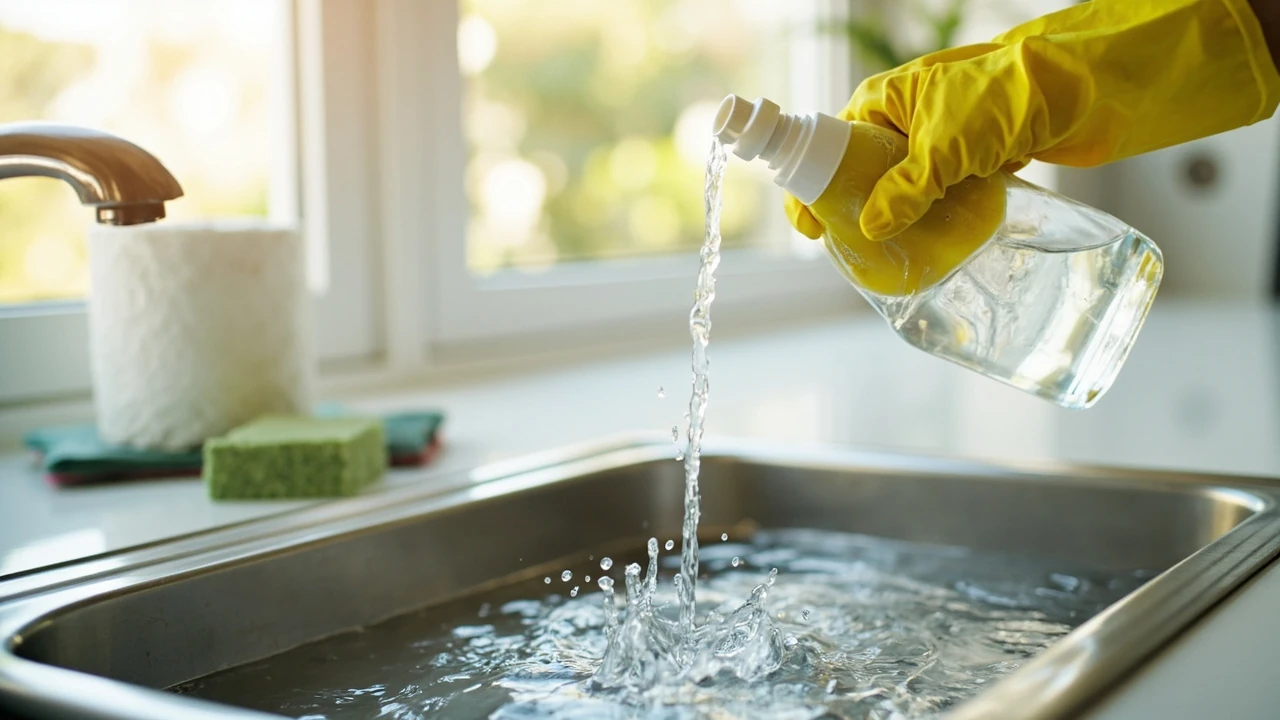
How to dispose of bleach safely at home
A half-used jug of chlorine bleach has been sitting under the kitchen sink since the last round of flu season, and now it is past its usefulness, its label is faded, and the container is starting to pit. That is a common situation, and the answer is not to dump the bottle in the trash bag or pour it across the driveway. Bleach is a reactive chemical, and the right way to get rid of it depends on how much you have, what type it is, and what your local waste program accepts.
This guide walks through how to dispose of bleach step by step, from the everyday case of a small leftover jug to larger quantities that should go to a hazardous waste facility. It also covers what to do with empty containers, which mistakes to avoid, and how to handle related products such as pool bleach, splashless varieties, and color-safe formulas.
What bleach actually is, and why disposal matters
Household chlorine bleach is a water-based solution of sodium hypochlorite, usually at 3 to 6 percent concentration for the kind sold in grocery stores. Industrial and pool products can run 10 to 12.5 percent, which is a noticeably stronger oxidizer. When sodium hypochlorite breaks down, it releases chlorine gas and forms corrosive byproducts such as sodium hydroxide and sodium chloride. That is why even “just bleach” deserves a careful pour, not a casual rinse.
The reactivity is exactly the reason disposal rules exist. Bleach mixed with ammonia creates chloramine gases. Mixed with acids like vinegar or some bathroom cleaners, it releases chlorine. Poured down a storm drain, it harms aquatic life and corrodes metal pipes. Poured in concentrated form into a septic system, it can disrupt the bacterial culture that makes the system work. Treating bleach like a normal household liquid leads to small incidents that add up across a neighborhood, which is the practical reason behind the disposal guidance covered below.
Read the label and the jug first
Before you pick a disposal route, look at three things on the container: the active ingredient, the concentration, and the hazard warnings. The disposal option that is safe for a 3 percent splashless household jug may be wrong for a 10 percent pool shock product with a corrosive label.
- Active ingredient: sodium hypochlorite is the most common, but oxygen bleaches (hydrogen peroxide based) and chlorine-based cleansers are different products with different rules.
- Concentration: 3 to 6 percent is typical for laundry bleach. Anything marked 8 percent or higher, or labeled for pools, is treated as a stronger hazardous product.
- Container condition: a leaking or corroded jug should be moved into a secondary container such as a plastic bucket before transport to keep drips off your car or your hands.
If the label is gone and the jug is unmarked, treat it as the stronger type and take it to a hazardous waste drop-off rather than guessing. There is no safe way to test concentration at home, and the cost of overestimating is small compared with the cost of underestimating.
Pick the right disposal method for the size of the job
Most readers fall into one of three situations: a small amount of leftover household bleach, a large jug or a pool product, or an empty container that still smells faintly of bleach. Each has a different correct path. The table below compares the three so you can match your situation to the safest method.
| Situation | Typical product | Best disposal method | Where it goes | Key caution |
|---|---|---|---|---|
| Small leftover amount (under one gallon) | 3 to 6 percent household laundry bleach | Dilute and pour down the drain with running water | Toilet or kitchen sink connected to a municipal sewer | Never pour into a storm drain, yard, or septic system without diluting first |
| Larger amount or higher concentration | Pool shock, 8 to 12.5 percent bleach, multiple jugs | Household hazardous waste drop-off | Local HHW collection event or permanent facility | Do not transport in a car with passengers or in a hot trunk |
| Empty or nearly empty jug | Rinsed household bleach bottle | Recycle the plastic or place with curbside recycling | Curbside bin where plastic jugs are accepted | Rinse three times before recycling; do not recycle if the container is corroded or unmarked |
Method 1: Dilute and pour small amounts down the drain
For ordinary household bleach in small quantities, the simplest approved method is to dilute it heavily with water and pour it down a drain that is connected to a municipal sewer. The treatment plant is designed to handle this kind of oxidizer, and the dilution protects your pipes and the local environment.
- Open a window or turn on the bathroom fan so the room is ventilated.
- Put on household rubber gloves and, if you are sensitive, safety glasses.
- Run cold water into the sink or toilet for a few seconds before pouring.
- Slowly pour a small amount of bleach, no more than about a cup at a time, into the stream of water.
- Let the water run for another minute after the bleach is gone, then rinse the sink with plain water.
- Wipe up any splashes with a damp paper towel, and bag the towel in a sealed plastic bag before throwing it in the trash.
The ratio that works in practice is roughly 1 part bleach to 10 or more parts running water, which keeps the concentration in the drain well below the level that would harm plumbing or bacteria. If you have a septic system, check with your septic service provider before doing this on a regular basis. A single small pour is usually fine, but a habit of pouring bleach into a septic tank can interfere with the biological treatment process over time.
For homeowners whose home is on a private well and a septic system, the conservative choice for leftover bleach is the hazardous waste route rather than the drain, just to avoid any risk of disturbing the septic biology. That trade-off is small in effort and large in peace of mind.
Method 2: Take larger amounts to a household hazardous waste site
When you have more than a small leftover amount, or when the product is at pool or industrial strength, the right destination is a household hazardous waste, or HHW, facility. Most cities and counties run these either as a permanent drop-off site or as periodic collection events, often on a weekend at a fire station or community center parking lot.
To find your local option, search “household hazardous waste” plus the name of your county or city, or check the website of your solid waste department. Many programs also accept paint, pesticides, motor oil, and fluorescent bulbs, so you can clear out a garage in one trip. The service is usually free for residents, although some programs charge a small fee for certain items or for businesses.
Transporting bleach to a drop-off takes a little preparation. Keep the product in its original container with the label intact so the staff know exactly what it is. Place each jug in a plastic bin or a sturdy trash bag with a little kitty litter at the bottom to absorb any leak. Drive the car with the windows cracked and go straight to the drop-off, rather than running other errands with the jug rolling around the back seat.
Method 3: Use it up or give it away
Disposal is a last option. If the bleach is still within its useful life, the cleanest answer is often to use it. Diluted household bleach is a workhorse for laundry whitening, disinfecting cutting boards, cleaning bathroom tile, and treating mildew on outdoor furniture. A little planning can turn a half jug into several months of normal cleaning work and remove the disposal question entirely.
Giving bleach away is another route some households choose. Community centers, schools, churches, and small janitorial operations often welcome a sealed, in-date jug of bleach. The product is the same one they would otherwise buy, and the transfer is a small reuse win. If you go this route, only hand over containers that are clearly labeled, unopened, or freshly opened and stored in a cool place, so the recipient knows what they are getting.
Method 4: Handle empty or nearly empty containers
An For additional context, empty bleach jug is a recycling question, not a hazardous waste question, as long as it is truly empty and you are willing to rinse it. Rinse the jug three times with water, pour the rinsate down the drain with the water running, and then put the cap back on and drop the jug in your recycling bin. Most curbside programs accept HDPE plastic, which is the same resin used for milk jugs, and the recycling stream is set up to handle small residues of cleaning products.
If the jug is corroded, bulging, or unlabeled, the safer move is to bag it and put it in the regular trash rather than the recycling. A damaged plastic jug can jam sorting equipment and can leak residue onto other recyclables. A small amount of waste is a fair trade for keeping the recycling stream clean.
Disposal rules that depend on the type of bleach
Not all bleach is the same, and the right disposal path depends on which product is in your hand. The table below compares the common types and what to do with each.
| Type of bleach | Typical concentration | Common use | Best disposal method | What to avoid |
|---|---|---|---|---|
| Household chlorine bleach (sodium hypochlorite) | 3 to 6 percent | Laundry, kitchen, bathroom cleaning | Dilute and pour down the drain in small amounts; HHW for larger amounts | Mixing with ammonia, acids, or any other cleaner |
| Splashless or thick bleach | 3 to 6 percent, with surfactants | Vertical surfaces, less dripping | Same as household bleach; the surfactants make dilution more important | Pouring undiluted; surfactants do not break down instantly |
| Pool shock or spa chlorine | 10 to 12.5 percent, sometimes granular | Pool and spa treatment | HHW drop-off; do not pour down the drain in this strength | Mixing with other pool chemicals, especially acids |
| Color-safe or oxygen bleach | Hydrogen peroxide or sodium percarbonate based | Color-safe laundry, gentle whitening | Dilute and pour small amounts down the drain; rinse the container | Combining with chlorine bleach in the same load or drain |
| 10 percent and up | Commercial cleaning, food service sanitation | Commercial hazardous waste contractor, not household trash | Pouring into storm drains or on the ground |
A few practical notes for the most common types. Splashless bleach contains surfactants that make it cling to surfaces, so it does not break down as quickly as a thin liquid. That makes dilution even more important if you are pouring it down the drain. Pool shock, especially the granular form, is a much stronger oxidizer and can react violently with organic material, so it belongs in the HHW stream every time. Color-safe bleach is usually gentler on pipes and septic, but the instructions above still apply for larger amounts.
What never to do when getting rid of bleach
The list of bad ideas is shorter than the list of good ones, but the bad ideas can cause real harm. These are the moves to keep out of your routine.
- Do not pour bleach into a storm drain, onto the ground, or into a street gutter. Storm drains usually lead directly to local waterways, where bleach damages aquatic life and corrodes metal.
- Do not pour bleach on weeds, grass, or soil as a homemade herbicide. It kills the plant tissue it touches, but it also disrupts soil chemistry and can wash into nearby water.
- Do not mix bleach with ammonia, vinegar, drain cleaner, or any other cleaner. The combination can release chlorine or chloramine gases that are dangerous to breathe in a small room.
- Do not pour undiluted bleach straight into a sink or tub. The undiluted form can pit metal plumbing, damage a septic system, and leave a concentrated slug of oxidizer that takes a long time to break down.
- Do not put a half-full jug of bleach in the regular trash. If the container breaks in the truck, the driver and the sorting facility are exposed to a strong oxidizer for the rest of the route.
- Do not pour bleach into a container that once held food or drink. A bleach bottle that looks like a water bottle is a serious safety risk to anyone in your household, including visitors and emergency responders.
If you have ever poured bleach into a sink that still held a drain cleaner, the lesson is to always rinse the basin with plenty of water first, and ideally to use a different sink for bleach than for acid-based cleaners.
Safety steps to take before, during, and after disposal
Bleach is a household chemical, but it is also a chemical, and the same care you take when cleaning the bathroom should apply when you are getting rid of it. The checklist below is the minimum that most safety agencies recommend.
- Ventilate the room by opening a window or turning on the exhaust fan before you open the jug.
- Wear rubber or nitrile gloves to keep the liquid off your skin, and consider safety glasses if you are pouring at eye level.
- Keep the area clear of children, pets, and anything that might knock the jug over mid-pour.
- Have a damp rag and a bag ready to catch drips before you start, so a small spill does not become a bigger one.
- Wash your hands and forearms with soap and water as soon as you finish, even if you did not see any splash.
- If bleach splashes in your eye or on a large area of skin, rinse with plain water for 15 minutes and call your local poison control center for guidance.
For anyone who is sensitive to chemical odors, the practical version of this list is even simpler. Pour small amounts in a well-ventilated room, leave the room for a few minutes after you finish, and let the fan do the work. Most people do not need respirators for a single jug of household bleach, but a basic paint respirator is a reasonable upgrade if you are cleaning out a closet full of cleaning products.
Special situations that change the answer
A few situations come up often enough to deserve their own short answers, because the general rule above needs a small adjustment.
Septic systems
Septic systems rely on a healthy bacterial culture to break down waste. Household bleach in normal cleaning doses does not usually harm a septic system, because the bacteria can recover between doses. The problem is a single large pour of undiluted bleach, or a habit of pouring the leftover from every cleaning session into the system. If you are on a septic system, the conservative move for any quantity larger than a cup is to send the bleach to the household hazardous waste program, and to switch to septic-safe cleaning products for daily use.
Private wells
If your drinking water comes from a private well, the local groundwater is your responsibility. A bleach spill in the yard can work its way toward the well and affect water quality for years. Keep bleach handling near a drain connected to a sewer, and never rinse a bleach jug on a gravel driveway or on the lawn.
Apartments and rentals
Renters who are moving out often face the question of what to do with cleaning products left behind. The simplest path is to take any sealed or partially used jugs to the nearest household hazardous waste event before the move, since the program is usually free for residents and it clears the apartment of a chemical that the next tenant should not have to deal with. Landlords and property managers will thank you for not leaving a closet of mystery cleaners behind.
Commercial kitchens and cleaning businesses
Commercial operations generate a different volume of bleach waste and are usually regulated as small-quantity generators of hazardous waste. The right path is a licensed hazardous waste hauler, not a household drain or a household drop-off. If you run a business that uses bleach at scale, the local solid waste department or your state’s environmental agency can point you to a registered hauler in your area.
How this fits into a sensible home waste plan
Bleach disposal is a small piece of a larger pattern. The general principle that keeps a household in good shape is to separate what belongs in the regular trash, what belongs in recycling, what belongs down the drain, and what belongs in hazardous waste, and to give each of those streams a place in the routine. Bleach almost always falls into either the drain or the hazardous waste stream, with recycling for the rinsed container.
A few habits make the whole system easier. Buy only as much bleach as you will use before the expiration date, which is usually about a year after manufacture. Store the jug in a cool, dark place, because heat and sunlight break down sodium hypochlorite faster and shorten the useful life. Keep the jug upright and sealed so the slow release of chlorine does not corrode the cap or the shelf under it. And when the jug is empty, rinse it before it goes into the recycling bin, so the residue does not contaminate the rest of the load.
For homeowners who want a deeper reference on how household chemicals are handled at the municipal level, the sodium hypochlorite overview covers the chemistry and the breakdown products, and the practical disposal walkthrough on wikiHow gives a second opinion on the small-amount drain method. Both are useful to keep on hand the next time the under-sink cabinet needs a cleanout.
If you also handle routine home maintenance yourself, it is worth keeping a mental list of which jobs connect to which disposal streams. A main drain cleaning appointment, for example, may involve handling a jug of stronger drain product, and a dryer vent cleaning service visit often leaves a small bag of lint soaked in cleaning solution that should go out with the trash rather than down the drain. Treating all of these as part of the same household waste plan keeps each one simple when its turn comes.
Frequently asked questions
Can I pour bleach down the drain?
Yes, in small amounts, if your home is connected to a municipal sewer. Dilute one part bleach with at least ten parts cold running water, pour it slowly into the drain, and let the water run for another minute afterward. This is the simplest method for ordinary household bleach left over from a single cleaning job.
Can I pour bleach down the storm drain or into the yard?
No. Storm drains flow to local waterways without treatment, and bleach harms fish and aquatic plants. Bleach in the yard damages soil chemistry and can leach into groundwater, which is a serious concern for homes on private wells. The drain that connects to a municipal sewer is the only outdoor drain that is safe for small amounts of diluted bleach.
What do I do with a large jug of pool bleach?
Take it to a household hazardous waste collection site. Pool bleach is usually 10 to 12.5 percent sodium hypochlorite, which is too strong for routine drain disposal. Most counties run free HHW events a few times a year, and many larger cities have a permanent drop-off facility.
Is it okay to throw a half-empty bleach bottle in the trash?
It is better not to. A leaking bottle in a garbage truck is a hazard for the driver and for the workers at the sorting facility. Use up the bleach, give it away, dilute it down the drain, or take it to a hazardous waste site rather than putting a half-full jug in the regular trash.
Can I recycle an empty bleach jug?
Yes, after you rinse it three times with water and pour the rinsate down the drain. Most curbside programs accept HDPE plastic, which is the same resin used for milk jugs. If the bottle is corroded, cracked, or missing its label, put it in the trash instead of the recycling.
How do I know if my bleach has gone bad?
Old bleach loses its strength rather than becoming dangerous. If the jug has been open for more than six months, or if it smells noticeably weaker than a fresh bottle, the cleaning power is probably too low to be worth keeping. Treat the jug as regular household bleach and dispose of it through the drain or hazardous waste stream.
Is splashless bleach different from regular bleach for disposal?
The active ingredient is the same sodium hypochlorite, but the surfactants added to make it cling to surfaces mean it does not break down as quickly. Dilute splashless bleach a little more than you would a thin liquid before pouring it down the drain, and use a little more water when rinsing the empty jug.
What should I do if bleach splashes in my eye?
Rinse the eye with clean, lukewarm water for at least 15 minutes, keeping the eyelid open. Remove contact lenses if you can do so easily. Call your local poison control center, or the national number 1-800-222-1222 in the United States, for follow-up guidance. Do not use any kind of neutralizing solution in the eye.
Can I mix bleach with vinegar or ammonia if I am pouring both down the drain?
No. Mixing bleach with any acid or with ammonia releases chlorine or chloramine gases, even in small amounts. If you have used an acid-based cleaner in a sink, rinse the basin thoroughly with water before pouring any bleach into the same drain, and ideally wait several minutes with the window open.
How often should I clean out my under-sink bleach supply?
Twice a year is a reasonable rhythm, usually tied to a daylight saving time change or a seasonal deep clean. Pull the bottles forward, check the dates, use up anything that is still strong, and send anything that is past its useful life to the drain or to the next hazardous waste collection event.
Leave a Reply