
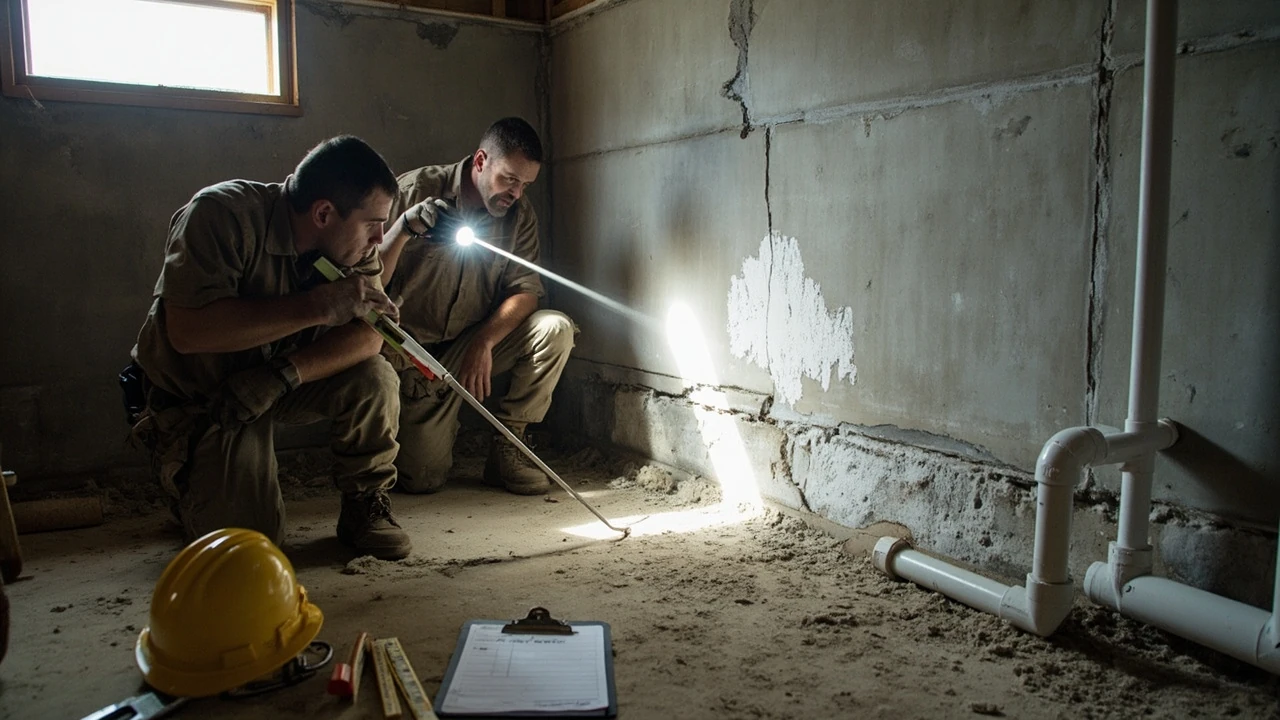
Indiana foundation service: what it covers and when you actually need it
A homeowner in Indianapolis opens a bedroom closet and notices a diagonal crack climbing from the door frame toward the ceiling. The crack is narrow, the door still latches, and the carpet hides any heave in the floor. Two weeks later, after a stretch of heavy rain, the crack is wider, a second one has appeared on the opposite wall, and the basement floor feels uneven near the utility sink. This is the moment most people in Indiana first search for a foundation service, and it is also the moment when small decisions start to matter a lot.
An Indiana foundation service is not a single product. It is a category of work that includes structural inspections, crack repair, pier and beam adjustment, basement waterproofing, drainage correction, and sometimes crawl space encapsulation. The right combination depends on the soil under the house, the age of the structure, and the cause of the movement, not on the name of the company you call first.
This guide walks through what a foundation service typically includes in Indiana, the regional conditions that drive most of the calls, the warning signs worth taking seriously, and the questions that separate a careful contractor from a high-pressure sales pitch. It is written for homeowners who are still deciding whether to make that first phone call.
Why Indiana homes have a foundation problem in the first place
Indiana sits on a patchwork of soils that swell, shrink, and drain poorly in equal measure. Three regional conditions account for the majority of the foundation issues that drive an Indiana foundation service call.
Expansive clay and silty clay soils
Much of central Indiana, including the Indianapolis metropolitan area, is underlain by clay-rich glacial till deposited during the Wisconsin glaciation. These clays absorb water readily and expand, then contract during dry spells. A footing that sits in this soil can move up and down by measurable amounts across a single year, and the cumulative effect over a decade is enough to crack poured concrete and shift masonry.
A high water table and seasonal saturation
Indiana averages 40 to 45 inches of precipitation a year, with spring storms that can drop several inches in a weekend. Flat lots in older neighborhoods do not always drain well, and downspouts that were once adequate may now be overwhelmed. Hydrostatic pressure against a basement wall is one of the most common drivers of horizontal cracking and inward bowing that a foundation service is asked to correct.
Legacy construction methods
Houses built before the 1970s often used limestone block, brick, or unreinforced concrete for basement walls. Even newer homes can have marginal reinforcement by modern standards. A foundation service in Indiana frequently deals with walls that were never engineered to handle the soil and water loads they are now seeing, sometimes after a nearby construction project changed the local drainage pattern.
What an Indiana foundation service actually does on site
The phrase “foundation service” covers a wide range of work, and a good contractor will explain which of these your home actually needs before quoting a price.
- Structural inspection and measurement of cracks, deflection, and floor level
- Interior or exterior crack injection using epoxy or polyurethane resin
- Wall stabilization with carbon fiber straps, steel I-beams, or wall plate anchors
- Installation of helical piers, push piers, or slab piers to transfer the load to stable soil or bedrock
- Basement waterproofing using interior drainage tile, sump pumps, and vapor barriers
- Exterior excavation, membrane application, and footing drain replacement
- Crawl space encapsulation with vapor barriers, dehumidifiers, and insulation
- Site grading, downspout extensions, and French drain installation
Some Indiana foundation service companies handle everything in-house. Others specialize in one or two methods and refer the rest out. Either model can work, but it is worth asking which crew will actually be on your property and who carries the warranty.
Warning signs that warrant a professional look
Not every crack is a crisis. Hairline shrinkage cracks in a new foundation, for example, are often cosmetic. The signs below are more likely to need a foundation service evaluation rather than a tube of caulk.
- Horizontal cracks in a poured concrete or block basement wall, especially with any inward bowing
- Stair-step cracks in brick or masonry that continue to widen over several months
- Doors and windows that begin to stick on the same side of the house
- Gaps between the wall and ceiling, or between the wall and a built-in feature like a fireplace
- Sloping or bouncy floors, especially in homes with a crawl space
- Standing water in the basement after rain, or a sump pump that runs constantly
- A musty odor, visible mold, or efflorescence on the lower walls
If you see only one of these and the others are absent, monitoring is reasonable. If two or more are present, or if any single sign is getting worse month over month, a structural inspection is the next step.
Reading the cracks: what different patterns usually mean
A foundation service technician will look at crack width, length, direction, and location before recommending a repair. The table below summarizes how those patterns are usually interpreted, although a structural engineer should confirm the diagnosis on your specific home.
| Crack pattern | Typical location | Likely cause | Typical response |
|---|---|---|---|
| Vertical hairline, less than 1/8 inch | Poured basement wall, often within a few years of construction | Concrete shrinkage during curing | Monitor, optionally seal with epoxy paste to keep moisture out |
| Vertical, wider at top or bottom | Poured or block wall, often near a corner | Differential settlement of the footing | Inspect footing, consider underpinning with piers if movement continues |
| Horizontal, mid-wall | Block or poured wall below grade | Hydrostatic pressure or frost pressure on the exterior | Wall stabilization plus exterior or interior drainage work |
| Stair-step in mortar joints | Brick or block above grade | Settlement or heave of the soil under the footing | Structural inspection, often piers plus repointing of the masonry |
| Diagonal from corners of doors and windows | Drywall inside the home | Framing movement tied to foundation shift | Confirm the cause at the foundation before repairing drywall |
Width is only part of the picture. A crack that is the same width but bleeding water, growing mold, or letting in radon needs a different response than a dry, stable crack of the same size.
Repair methods a foundation service in Indiana is most likely to recommend
There is no single best fix. The right method depends on the diagnosis, the soil report if one is available, and your budget for both the repair and any follow-up work. The list below covers the most common options an Indiana homeowner will be offered.
- Epoxy or polyurethane crack injection: Best for dry or actively leaking non-structural cracks in poured walls. The wall must be accessible from the inside and the crack must be stable.
- Carbon fiber straps: Used on walls with early-stage horizontal cracking and minimal inward deflection. They are bonded to the wall with epoxy and tied into the floor and joists.
- Steel I-beams or wall braces: Used for more advanced bowing. They take up floor space and are visible, but they stop further movement when properly installed.
- Helical piers: Screw-style piers advanced to a calculated torque that corresponds to a load-bearing soil layer. Common for settling porches, chimneys, and additions.
- Push piers: Hydraulic piers driven through a bracket against the footing. Used when a stable bearing stratum is reachable and the structure weight can lift the footing back toward level.
- Interior drainage and sump pump system: A perimeter trench inside the basement that feeds a sump pit. Often paired with a battery backup for storm season.
- Exterior waterproofing membrane and footing drain: Excavation to the footing, cleaning the wall, applying a membrane, and replacing or adding a footing drain. More disruptive but addresses the problem from the source.
- Crawl space encapsulation: Heavy vapor barrier over the soil, sealed seams, often a dehumidifier. Helps with moisture, odor, and energy use.
What a thorough inspection looks like
A credible Indiana foundation service inspection takes 60 to 90 minutes for a typical single-family home and covers more than the wall with the obvious crack. Expect the inspector to do the following.
- Walk the exterior to check grading, downspout discharge, and visible crack patterns in the masonry.
- Measure floor elevation across the basement slab or crawl space with a laser or water level.
- Photograph and document every crack, including width and any signs of water or efflorescence.
- Check the sump pump, if present, and confirm whether it is operational and properly discharging.
- Look at the rim joist, sill plate, and any visible framing for rot, mold, or insect damage.
- Ask about the history of the home, including when cracks first appeared and any prior repairs.
- Provide a written report with the diagnosis, recommended repairs, and a clear warranty structure.
If an inspector arrives and offers a quote on the spot without doing most of the above, that is a reason to slow down rather than speed up.
How Indiana’s climate shapes the work
Indiana has cold winters, humid summers, and a freeze-thaw cycle that punishes shallow footings and uninsulated basement walls. A foundation service operating in the state has to plan around a few predictable patterns.
- Spring thaw: Saturated soil loses bearing capacity briefly, which can accelerate settlement that started the previous fall.
- Summer storms: Brief, intense rainfall events overwhelm aging footing drains and window wells, showing up as basement seepage.
- Late summer drought: Clay soils shrink, opening gaps under footings and around utilities. This is when many stair-step cracks first appear in the masonry above grade.
- Winter freeze: Frost depth in central Indiana reaches 30 to 36 inches. Uninsulated shallow footings can heave, especially on south-facing walls with less snow cover.
These patterns are one reason a repair done in late fall may look different from the same repair recommended in early spring. The diagnosis is the same, but the urgency and the staging of the work can shift.
How to compare Indiana foundation service companies
The state does not require a general contractor license at the state level, which means a homeowner has to do more of the vetting. The following comparison points are useful when reviewing bids.
| What to ask or check | What a strong answer looks like | What a weak answer looks like |
|---|---|---|
| Years in business under the same name | At least 5 years, with references in your county | Recently renamed or only an out-of-state office |
| Insurance and bonding | Current general liability and workers’ comp, certificates on request | Vague answers or “we’re covered” without proof |
| Inspection process | On-site, written report, no obligation | Drive-by quote or a quote over the phone |
| Method recommendation | Tied to a specific diagnosis and a structural engineer’s input when needed | One method recommended for every house regardless of cause |
| Warranty | Written, transferable, with clear terms on what is and is not covered | Verbal “lifetime” promise with no paperwork |
| Crew | W-2 employees or long-term crews trained by the company | Subcontracted day labor with no oversight |
| Payment terms | Reasonable deposit with most of the balance on completion | Large upfront payment or pressure to sign the same day |
| References | Local addresses you can drive past, or recent online reviews with detail | No references, or only a curated testimonial page on the company site |
For a broader comparison of national and regional providers, the roundup of best foundation repair companies is a useful starting point, though the final choice should still come down to local experience with Indiana soils.
Cost ranges and what drives them
Pricing varies widely because the work varies widely. A simple epoxy injection on a single short crack is in a different category from a full perimeter drainage system with wall stabilization. The ranges below reflect typical 2026 pricing for Indiana and are meant as orientation, not as quotes.
| Type of work | Typical Indiana price range | Main cost drivers |
|---|---|---|
| Crack injection, single wall, 1-2 cracks | $500 – $1,500 | Crack length, accessibility, whether the wall is finished |
| Carbon fiber strap per strap | $350 – $700 | Number of straps, wall height, finish on the wall |
| Steel I-beam per beam | $1,000 – $2,500 | Beam length, embedment, floor finishing |
| Helical or push pier, installed | $1,500 – $3,500 per pier | Depth to load-bearing soil, number of piers, access |
| Interior drainage system with sump pump | $5,000 – $15,000 | Basement perimeter, finish removal, pump quality |
| Exterior waterproofing, full wall | $10,000 – $30,000+ | Excavation depth, landscaping, sidewalk or driveway removal |
| Crawl space encapsulation | $4,000 – $12,000 | Square footage, dehumidifier, insulation |
Most Indiana foundation service companies will offer financing, but it is worth comparing the total cost including interest to the all-cash price. A lower monthly payment with a 12-year term can end up costing more than a 5-year term at a slightly higher payment.
Working with a structural engineer versus a contractor
An engineer and a contractor answer different questions. The engineer tells you what is structurally happening and what the repair needs to achieve. The contractor tells you how they will achieve it and at what price. For a repair that involves piers, wall bracing, or any structural load path, getting an independent engineer’s report before signing a contract is usually money well spent.
Expect to pay $400 to $800 for a residential structural engineer’s site visit and letter in Indiana. That report often saves money by catching a method that would not have worked, or by confirming a less expensive method is safe. For purely cosmetic work, such as sealing a stable shrinkage crack, an engineer is usually not necessary.
Questions to ask during the estimate visit
It is easy to forget half of what you wanted to ask once a contractor is in your basement. The list below covers the questions a careful homeowner typically works through before signing.
- What is the diagnosis, in one or two sentences, and what evidence supports it?
- Is the movement active or has it stabilized? How do you know?
- Is a structural engineer’s report part of your proposal, or do you recommend one separately?
- Which crew will be on site, and how long have they worked for your company?
- What permits are required, and who pulls them?
- What is the warranty, what does it cover, and is it transferable to a future owner?
- What can go wrong during the work, and how is that handled?
- If I do nothing for another year, what is the realistic worst case?
The last question is the one that often clarifies the urgency. A good contractor will give you a straight answer. A high-pressure salesperson will use the question to push a same-day signing.
Red flags that should make you pause
The foundation repair industry has more than its share of aggressive marketing, partly because the work is expensive and the symptoms are scary. The signs below are not proof of a bad company, but they are reasons to slow down.
- “Free” inspections that end with a high-pressure quote valid only that day
- A blanket recommendation of the most expensive method regardless of the home
- No written report, or a report that is just a contract with line-item prices
- Asking for a large deposit before any permit is pulled or material is delivered
- Refusing to provide proof of insurance or recent local references
- Suggesting that the only safe option is their proprietary system
None of these mean the company is dishonest, but they are reasons to get a second opinion. Most foundation problems in Indiana are not emergencies that require a decision in 24 hours.
Insurance, warranties, and what is usually covered
Standard homeowners insurance in Indiana typically does not cover foundation repair caused by soil movement, settlement, or hydrostatic pressure. It may cover sudden, accidental events such as a burst pipe that undermines a footing, or a vehicle impact. Read the policy language rather than relying on a verbal answer from an adjuster.
Warranties from a foundation service company come in two main forms: a workmanship warranty on the installation and a manufacturer warranty on materials such as pier brackets or sump pumps. National brands often advertise “lifetime” warranties, but the lifetime is the lifetime of the structure, and the warranty only applies if the original installation is intact and the homeowner follows the maintenance plan. Ask for both documents and read the exclusions.
Preventive steps that reduce the chance of a future call
You cannot control the soil under your house, but you can control a surprising amount of the water that reaches it. Most of the calls an Indiana foundation service receives are tied to drainage that has slowly gotten worse over the years.
- Keep downspouts extended at least 6 feet from the foundation, and confirm they discharge to a permeable area
- Regrade the soil along the foundation so the surface slopes away at roughly 6 inches over 10 feet
- Clean gutters in spring and fall so they do not overflow next to the foundation
- Keep window wells clean and check that they are sealed to the wall
- Avoid planting deep-rooted trees within 15 to 20 feet of the foundation, or plan for root barriers
- Test the sump pump before storm season and consider a battery backup
- Maintain consistent indoor humidity, especially in summer, to reduce crawl space moisture
None of these replace a real repair when the foundation has already moved, but they often prevent a small problem from becoming a big one.
How long repairs last and what maintenance they need
A well-executed foundation service in Indiana is generally considered permanent for the issue it addressed, but only when the underlying cause has also been addressed. Piers do not stop heave from a saturated clay soil, and a sump pump does not stop bowing if the exterior drainage is still failing. The table below summarizes realistic expectations for the most common repairs.
| Repair type | Realistic service life with maintenance | Maintenance the homeowner is responsible for |
|---|---|---|
| Epoxy or polyurethane crack injection | 10+ years if the wall remains stable | Monitor the crack, keep the surrounding area dry |
| Carbon fiber straps | Lifetime of the structure, assuming no further movement | Visual inspection, avoid drilling into the wall near straps |
| Steel I-beams | Lifetime of the structure | Check anchors annually, watch for rust at the base |
| Helical or push piers | Lifetime of the structure | Verify downspout and grading so soil moisture stays consistent |
| Interior drainage and sump pump | 20-30 years for the system, 5-10 for the pump | Test the pump yearly, replace the battery every 3-5 years, clear the discharge line |
| Exterior waterproofing membrane | 20-30+ years | Keep the grade and footing drain clear, watch for settling backfill |
Annual checks take an hour and prevent most of the warranty disputes that come up in this industry.
Working with neighbors and HOAs on shared walls
Row houses, duplexes, and townhomes in cities like Indianapolis, Fort Wayne, and Evansville share foundation walls. An Indiana foundation service contractor will usually want to look at both sides of the wall and may need access to a neighbor’s basement for part of the work. Coordinating the inspection with the neighbor up front avoids a last-minute scramble, and in most cases the cost is split according to the location of the cause rather than the ownership of the wall.
HOAs in planned communities typically require notice before exterior excavation, even on a private lot. The contractor’s office is used to handling these notifications, but the homeowner should confirm the approval is in writing before the work starts.
A short checklist before you sign
Use the list below as a final pass once you have two or three estimates in hand. It will not change the underlying diagnosis, but it will keep the decision grounded.
- Confirm the diagnosis is the same across all bids, or understand the reason it differs.
- Compare methods, not just total price, since cheaper methods sometimes address less.
- Read the warranty exclusions, especially around pre-existing conditions.
- Check the schedule: when can the work start, and how long will the crew be on site?
- Confirm cleanup and restoration responsibilities, including landscaping, concrete, and drywall.
- Make sure payment terms are clear, including the deposit, progress payments, and final balance.
- Get everything in writing before work begins, including verbal promises from the estimate visit.
Frequently asked questions
How do I know whether a foundation crack in my Indiana home is serious?
Width, direction, and change over time are the three signals. A horizontal crack, a stair-step crack in masonry, or any crack that grows over several months warrants a professional inspection. Hairline vertical cracks under 1/8 inch in a relatively new foundation are often cosmetic.
What is the average cost of foundation repair in Indiana?
Most homeowners in Indiana spend between $5,000 and $15,000 on a mid-range repair such as an interior drainage system with wall stabilization. A single crack injection can cost under $1,000, while full exterior waterproofing with piers can exceed $30,000. The diagnosis is the only reliable way to know which range applies.
Do I need a permit for foundation work in Indiana?
Most cities and counties in Indiana require a building permit for structural foundation work, including piers, wall bracing, and exterior excavation. Cosmetic crack injection often does not require a permit. Your contractor should know the local rule and pull the permit, but it is reasonable to confirm.
Will homeowners insurance pay for a foundation repair in Indiana?
Standard policies usually exclude damage from soil movement, settlement, and water that enters gradually. Coverage may apply for sudden events like a burst pipe or a vehicle strike. Review your specific policy language and ask your adjuster in writing.
How long does a typical foundation service project take in Indiana?
A single crack injection is usually finished in a few hours. Pier installation on a small section can take a day. A full interior drainage system with a sump pump often takes two to four days. Full exterior excavation and waterproofing can take a week or more depending on depth, access, and weather.
Is it safe to buy a house with previous foundation work in Indiana?
It can be. The key items to review are the engineer’s report at the time of the original repair, the warranty paperwork, and any signs that the problem has returned. A home inspector who is familiar with foundation repair can spot red flags during the contingency period.
Can foundation repair be done in winter in Indiana?
Interior work such as crack injection, wall braces, and interior drainage can be done year-round. Exterior excavation and waterproofing are usually scheduled between late spring and early fall because frozen ground, frost depth, and spring saturation make the work harder and riskier. Pier installation can also be done in cold weather with the right equipment.
How do I find a reliable Indiana foundation service company?
Start with local references, especially from people in the same county and ideally the same soil type. Confirm the company carries insurance, has a written inspection process, and offers a transferable warranty. Comparing two or three estimates is normal and expected.
What is the difference between basement waterproofing and foundation repair?
Waterproofing addresses water entry and moisture control through drainage, sump pumps, and membranes. Foundation repair addresses structural movement such as cracks, settling, and bowing walls. The two often overlap, and a complete job usually includes both.
Will foundation repair affect my property value?
A documented, warrantied repair from a recognized Indiana foundation service company generally preserves or supports value, because the buyer no longer carries the unknown risk. An undocumented repair, or one without a transferable warranty, can reduce value because the buyer has to assume the worst.
Leave a Reply