
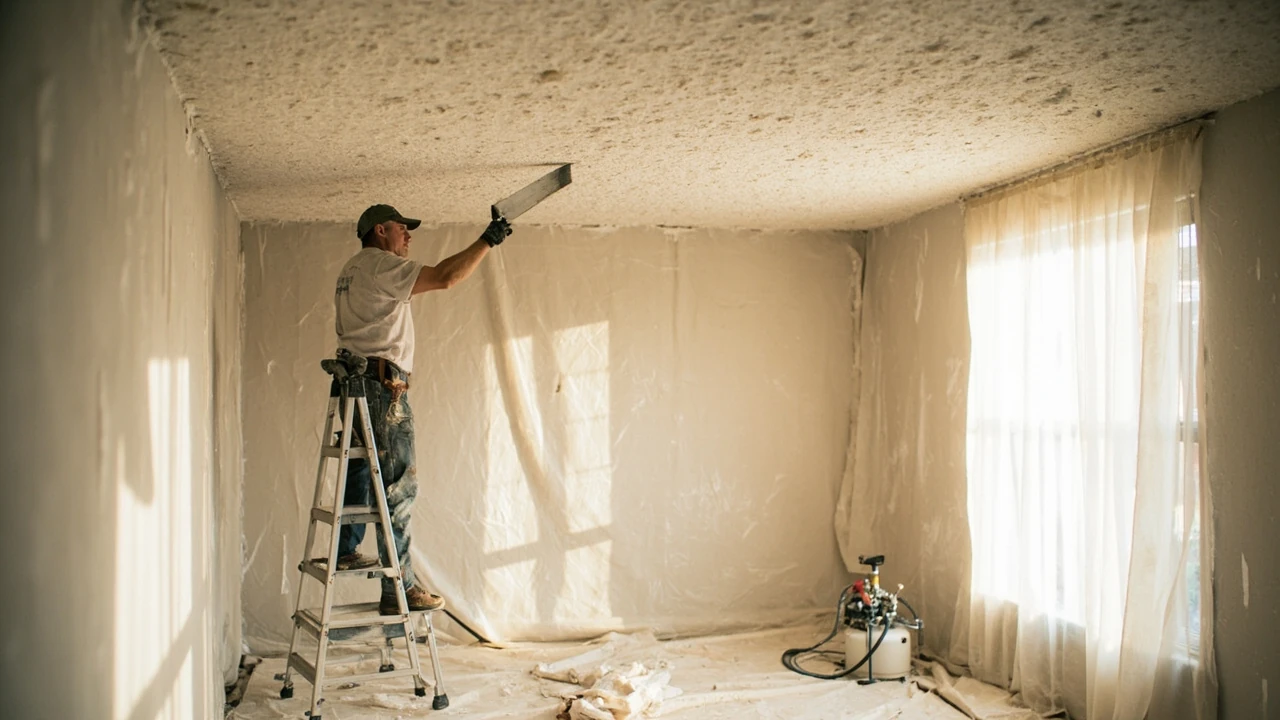
Popcorn ceiling removal cost: what drives the final number
Most homeowners who ask about popcorn ceiling removal cost are not really shopping for a square-foot price. They are trying to figure out whether the line item on an estimate is fair, whether the job will balloon once the crew starts scraping, and whether a flat ceiling is even worth it for the rooms they care about. Those are the right questions, because the per-square-foot figure is only the starting point. The bigger variables are usually the ones that get added later, after the texture is wet, scraped, and inspected up close.
What follows is a practical breakdown of what a typical popcorn ceiling removal cost looks like, the factors that swing the price in either direction, the asbestos question that can change the entire scope of work, and the choices a homeowner has to make between scraping, covering, and leaving the texture in place. The goal is a realistic budget before the phone call, not a single national average that falls apart the moment an estimator walks through the front door.
What a typical popcorn ceiling removal cost looks like
For a job that does not involve asbestos, professional popcorn ceiling removal cost usually lands somewhere between $1.25 and $3.50 per square foot of ceiling, with most single-room projects falling in the $400 to $1,200 range once mobilization, prep, and cleanup are included. Whole-home projects in the 1,500 to 2,500 square foot range often run from roughly $2,000 to $7,500, depending on ceiling height, paint history, and the level of finish on the surface that is left behind.
Two things are worth noticing in those ranges. First, the spread is wide because the work is genuinely different from house to house. A 9-foot ceiling with unpainted texture in a vacant room is a fast, predictable job. A 20-foot foyer with two prior paint jobs, a chandelier, and a half-flight of stairs is a slow, custom job, and crews will price it accordingly. Second, the per-square-foot price is not the only number on the estimate. Mobilization, room prep, drywall repair, skim coating, and prime-and-paint are typically listed separately, and each one of them can move the popcorn ceiling removal cost by a meaningful amount.
What actually changes the price on your estimate
When two contractors give you different numbers for the same ceiling, they are not necessarily being dishonest. They are weighting the same job differently, because the factors below are the ones that move popcorn ceiling removal cost the most in real residential work.
Asbestos status
If the texture was applied before the mid-1980s, there is a real chance it contains asbestos. A professional lab test costs roughly $250 to $850 for a small number of samples, and that fee is almost always worth it before any work begins. If the sample comes back positive, the job is no longer a scraping project. It becomes an asbestos abatement project, with sealed containment, negative-pressure equipment, licensed crews, and disposal documentation. That change can multiply popcorn ceiling removal cost by a factor of three to ten, and in some jurisdictions it also requires a permit and a clearance certificate at the end. The asbestos question is not a footnote. It is the single biggest pricing variable in the entire scope of work.
Paint history of the texture
Unpainted popcorn texture is friendly. It absorbs water, softens, and scrapes off in sheets. Texture that has been painted, even once, behaves like a thin skin. Water does not penetrate, scraping turns into chipping, and the drywall paper underneath often tears with it. Most contractors price painted texture as a separate line item, sometimes $1.00 to $2.00 per square foot higher than unpainted, because the labor and the drywall repair both go up. If you have already painted the ceiling yourself, expect that to show up on the estimate.
Ceiling height and access
Height changes the equipment. Standard 8 to 9 foot ceilings are worked from a step ladder or short stilts. Anything above about 10 feet usually requires scaffolding, which adds rental, setup time, and slower production. Vaulted ceilings, two-story foyers, and stairwells add time as well, because the crew has to work around angles, fixtures, and railings. A tall, open living room is not just a bigger version of a bedroom. It is a different job, and popcorn ceiling removal cost reflects that.
What you want the ceiling to look like when it is done
This is the part that surprises homeowners. Scraping is only the first step. Once the texture is off, you are usually looking at torn paper, gouges, and old joint compound. If you want a clean, flat ceiling, the surface has to be patched, skim coated, sanded, primed, and painted. Many contractors bundle scrape, patch, and prime into one line, and paint into another. A “smooth finish” line is not a luxury on most estimates. It is the part of popcorn ceiling removal cost that turns a renovation into a result you actually want to live with.
Regional labor and disposal
Labor is the largest component of the price, so where the work is happening matters. Coastal and high-cost metros price higher than rural areas for the same scope. Disposal fees for debris, especially if the texture is classified as asbestos waste, also vary by region and by transfer station. Two identical ceilings in two different zip codes can produce meaningfully different popcorn ceiling removal cost numbers, even when the local estimators are being honest with each other.
Cost ranges by project type
The table below puts typical popcorn ceiling removal cost into project shapes that match how contractors actually bid. Treat the figures as planning ranges rather than quotes, since your specific ceiling, paint history, and asbestos status will move the numbers up or down.
| Project type | Typical size | Unpainted texture, no asbestos | Painted texture or repair-heavy | Asbestos-positive texture |
|---|---|---|---|---|
| Single small room (bedroom, office) | 100 to 200 sq ft | $300 to $800 | $700 to $1,500 | $1,500 to $4,000+ |
| Single large room (living room, basement) | 300 to 500 sq ft | $700 to $1,800 | $1,500 to $3,500 | $3,500 to $9,000+ |
| Whole single-story home | 1,200 to 1,800 sq ft of ceiling | $1,800 to $4,500 | $3,500 to $8,500 | $7,000 to $20,000+ |
| Whole two-story home | 2,000 to 3,000 sq ft of ceiling | $3,000 to $7,500 | $6,000 to $14,000 | $12,000 to $30,000+ |
| Vaulted or stairwell section only | 100 to 400 sq ft | $500 to $1,500 | $1,200 to $3,000 | Priced per site, often per day |
Cost breakdown by line item
The second table breaks a typical popcorn ceiling removal cost into the line items that show up on most written estimates. This is the level of detail that makes it possible to compare two bids side by side and to decide what is worth paying for.
| Line item | What it covers | Typical price range | What changes the number |
|---|---|---|---|
| Asbestos testing | Lab analysis of a small sample collected by an inspector | $250 to $850 | Number of samples, local lab fees, rush turnaround |
| Prep and protection | Plastic on walls, floors, and furniture; sealing vents; fixture wrap | $150 to $600 per room | Room size, flooring sensitivity, fixture count |
| Scraping labor | Misting, scraping, bagging the texture | $1.25 to $3.50 per sq ft (no asbestos) | Height, paint history, drywall condition underneath |
| Drywall repair | Patching torn paper, gouges, fastener holes | $2 to $6 per sq ft of damaged area | Condition of original drywall, painter history |
| Skim coat and finish | Thin layer of joint compound over the whole ceiling, sanded smooth | $1.00 to $2.50 per sq ft | Desired smoothness, ceiling square footage |
| Prime and paint | Ceiling primer plus one or two coats of ceiling paint | $0.75 to $2.00 per sq ft | Number of coats, ceiling color, access difficulty |
| Asbestos abatement | Sealed containment, negative pressure, licensed removal and disposal | $3 to $10+ per sq ft | Containment complexity, jurisdiction, disposal fees |
| Clearance certificate | Post-abatement air testing and written sign-off | $150 to $500 | Local requirements, inspector availability |
How the job is actually priced
Most residential popcorn ceiling removal cost is built from a small number of line items, even when the total number on the estimate looks intimidating. Knowing what those lines are makes it much easier to compare two bids and to decide what you actually want to pay for.
- Prep and protection. Plastic sheeting on walls, floors, and furniture, sealing of vents and returns, and removal or wrapping of light fixtures. This is where rooms with a lot of built-ins or delicate flooring start to cost more.
- Scraping labor. Misting, scraping, and bagging the texture. The number is driven by square footage, height, paint history, and how cleanly the underlying drywall was finished in the first place.
- Drywall repair. Patching torn paper, gouges, and old fasteners. This is one of the easiest places for a price to creep upward mid-project, so it is worth asking how it is billed.
- Skim coat and finish. A thin layer of joint compound over the entire ceiling to make it truly flat. Optional in the sense that you can leave a slightly mottled surface, but expected in most finished homes.
- Prime and paint. Often a separate line, sometimes by the same crew, sometimes by a different painter. Ceiling paint is not glamorous, but it is part of a real result.
- Asbestos handling. Testing, sealed containment, negative-pressure equipment, licensed disposal, and any required clearance certificate. Only present if the texture is positive, but it dominates the budget when it appears.
DIY versus hiring a pro
For unpainted, asbestos-free texture in a single empty room, a careful homeowner can do this job. The tools are modest: a pump sprayer, a wide drywall taping knife, plastic sheeting, painter’s tape, and a dust mask. The skill ceiling is low but the patience ceiling is high, because the difference between a clean scrape and a torn-up drywall paper ceiling is mostly technique and time. If you have never scraped a ceiling before, the first 50 square feet are a learning experience you are paying for in drywall repair.
For most occupied homes, hiring a pro ends up being the better value. The crew can prep a room and scrape a ceiling in a single day, and the room is usually back in service within a week once patching, priming, and painting are done. A homeowner doing the work in evenings and weekends is often looking at two to four weeks of disrupted room access, plus a separate trip to rent or buy the right tools. Once you add the value of your own time, DIY popcorn ceiling removal cost is rarely as cheap as the materials receipt suggests.
Independent guidance on what homeowners typically pay and what to expect on a job site is well summarized in this overview of popcorn ceiling removal costs, including the per-square-foot ranges and the asbestos testing step that should happen before any scraping starts.
Alternatives that change the budget
Not every popcorn ceiling needs to come off. For some homes, especially where the texture is in good shape and the homeowner simply wants a more modern look, there are alternatives that move the popcorn ceiling removal cost out of the project entirely.
Covering the texture with drywall
A thin layer of new drywall screwed directly over the existing ceiling is a common alternative in homes with very uneven or heavily painted texture. It is faster, dustier on install day, and leaves a perfectly flat surface ready for prime and paint. The cost is often comparable to a full scrape and skim, but it loses some ceiling height, can interfere with light fixtures and ceiling fans, and is harder to do cleanly around crown molding.
Skim coating over the texture
Rather than scraping, a contractor can apply a thin skim coat over the popcorn texture to create a flat surface in place. This avoids the mess of scraping and the risk of asbestos disturbance, but it does not remove the texture, and any cracks or water stains in the old ceiling will still need to be addressed underneath. It is a useful option when the texture is well bonded and the goal is purely visual.
Painting and leaving the texture
For homeowners who are simply tired of the dated look, a fresh coat of bright ceiling paint can make a surprising difference. Popcorn ceiling removal cost is a much bigger conversation than paint, and if the texture is intact, unpainted, and not asbestos-positive, a good paint job is the lowest-friction path forward. It does not modernize the ceiling the way a smooth finish does, but it also does not require a contractor.
Leaving it alone
In rooms that are rarely used, especially basements, garages, and bonus rooms, the most honest answer to popcorn ceiling removal cost is sometimes “none of it.” If the ceiling is sound, the texture is not a deal-breaker for buyers in many markets, and the room is not a primary living space, the money is often better spent elsewhere.
The asbestos question, in detail
Because asbestos is the single largest swing factor in popcorn ceiling removal cost, it is worth spending a moment on how to handle it correctly rather than treating it as a checkbox. Popcorn texture manufactured before roughly 1985 in the United States often contained asbestos as a binder, and the material is generally considered safe as long as it is not disturbed. Scraping, sanding, or drilling into it without proper controls can release fibers into the air, which is the actual health concern, not the mere presence of the material.
The reasonable process for a homeowner who is unsure is straightforward. First, have a small sample or two collected by a licensed inspector and sent to an accredited lab. If the result is negative, the project is a normal scrape-and-finish job, with the usual dust control. If the result is positive, the scope changes. The ceiling is no longer a candidate for DIY removal, the crew is a licensed abatement contractor, and the work area is sealed off with plastic and negative pressure. Disposal goes through a licensed waste hauler, and many jurisdictions require a written clearance certificate at the end before the space is reoccupied.
The cost of testing is small compared to the cost of guessing wrong. A positive sample handled as a normal scrape creates a real liability for the homeowner, both in health terms and in any future disclosure when the property is sold. The Asbestos Institute’s breakdown of testing fees and abatement requirements is a useful place to confirm the ranges before scheduling an inspector.
How to read two estimates that disagree
It is normal to get two popcorn ceiling removal cost estimates that differ by 20 to 40 percent, even from reputable contractors. The right response is not to assume one of them is dishonest. It is to put both estimates on the same page, line by line, and ask each contractor to walk through what is and is not included.
- Check the prep line. A low number often means minimal floor and wall protection, which is fine in an empty room but a problem in a furnished one.
- Look at drywall repair. Some estimates include a fixed amount of patching, others bill it hourly. The contractor who bills hourly may be the more honest one if your ceiling is in rough shape.
- Ask about the finish. A quote that ends at “scraped” is not the same job as one that ends at “primed and ready for paint.” Make sure you are comparing the same end state.
- Confirm the asbestos assumption. If one estimate includes testing and the other does not, the difference may be in the scope, not the price.
- Ask about timing. A two-day crew is not the same cost as a five-day crew, and the longer estimate often includes more thorough finish work.
How to budget realistically
A useful way to approach popcorn ceiling removal cost is to set three numbers, not one. The first is a floor, based on a no-frills scrape with limited drywall repair in a single room or two. The second is a mid-range number, which assumes a whole-home scope, a normal amount of patching, and a proper skim coat to a flat finish. The third is a ceiling, which assumes painted texture, more drywall repair, possible asbestos containment, and any structural surprises once the texture comes off.
Once those three numbers exist, the conversation with a contractor becomes much more useful. Instead of “how much does it cost,” you can ask which of the three numbers the contractor is closer to, what would push the job from the mid-range estimate to the ceiling estimate, and what choices you can make to keep the project inside the floor. That is the level of detail that actually changes a bid, and it is also where the most avoidable popcorn ceiling removal cost lives.
Questions to ask before signing a contract
Before any work begins, a few targeted questions can prevent most of the disputes that drive popcorn ceiling removal cost above the original number. The list below is short on purpose. If a contractor cannot answer these clearly, the project is not ready to start.
- What is the per-square-foot rate, what does it include, and what is billed separately?
- How is asbestos handled, and is testing included or priced separately?
- What happens if the drywall underneath is damaged during scraping?
- What level of finish is included: scraped, patched, skim coated, primed, painted?
- How long is the room out of service, and what is the daily cleanup expectation?
- Is the crew licensed for abatement if the texture tests positive?
- What warranty or touch-up policy is offered on the finished surface?
Frequently asked questions
How much does popcorn ceiling removal cost per square foot?
For unpainted, asbestos-free texture, professional popcorn ceiling removal cost typically runs $1.25 to $3.50 per square foot. Painted texture, taller ceilings, and asbestos-positive material push that range significantly higher, and most estimates also include separate line items for prep, drywall repair, and finishing.
Is it cheaper to remove popcorn ceiling or cover it with drywall?
For most single-story homes, the costs are close. Scraping is messier but preserves ceiling height, while a drywall overlay is cleaner on install day but reduces room height and complicates light fixtures and trim. The right choice depends on how the ceiling is finished around the edges and how much height you can afford to lose.
How do I know if my popcorn ceiling has asbestos?
The only reliable way is a lab test of a small sample, usually collected by a licensed inspector. Texture installed before the mid-1980s is more likely to contain asbestos, but the only way to know is to test. If the result is positive, removal must be done by a licensed abatement contractor under sealed containment.
Can I remove popcorn ceiling myself to save money?
You can, if the texture is unpainted, has tested negative for asbestos, and you are willing to spend the time. The tools are inexpensive, but the labor is significant, and mistakes in scraping usually show up as drywall paper damage that has to be repaired before priming. For most homeowners, professional work is faster and the total cost is closer to the DIY cost than people expect.
How long does popcorn ceiling removal take?
A single room typically takes one day to scrape and bag the texture, plus a few additional days for patching, skim coating, priming, and painting. A whole-home project is usually a one to two week job for the crew, with a few extra days of cure time before paint. Asbestos-positive projects take longer because of containment, clearance testing, and the slower pace of regulated work.
Does removing popcorn ceiling increase home value?
It depends on the market and the room. In homes where dated popcorn texture shows up on buyer feedback, a smooth ceiling can make a measurable difference, especially in main living areas and primary bedrooms. In lower-visibility rooms, the return is often smaller than the cost. A local real estate agent who sees your specific neighborhood compete with other listings is the best person to answer this for your situation.
Do I need a permit to remove popcorn ceiling?
For a standard scrape with no asbestos, most jurisdictions do not require a permit. The rules change as soon as asbestos is involved, and many states and cities require a permit and a licensed contractor for abatement work. The contractor you hire should know the local requirements, and that is one of the easiest things to confirm before the project starts.
What is the best alternative to removing popcorn ceiling?
If the texture is well bonded and you do not need a flat ceiling, a fresh coat of ceiling paint is the lowest-cost option. For a smoother look without scraping, a skim coat over the texture or a thin drywall overlay both work, with different tradeoffs around height loss and finish quality. The right answer depends on how you want the room to feel and how much disruption you can tolerate.
How do I keep popcorn ceiling removal cost from ballooning?
Test for asbestos before any other decision, decide on your finish level in advance, and ask contractors to spell out what is and is not included. Most overruns come from unclear scope, not from dishonest pricing, and a clear written estimate is the simplest way to keep the project on budget.
Is it worth removing popcorn ceiling in a rental property?
Usually not, unless the texture is failing or the property is being repositioned for a higher rent. The payback is hard to justify in a rental, where tenants are typically less sensitive to texture and where any disturbance requires re-renting the unit. A fresh paint job is usually the better investment for rental ceilings.
Leave a Reply