
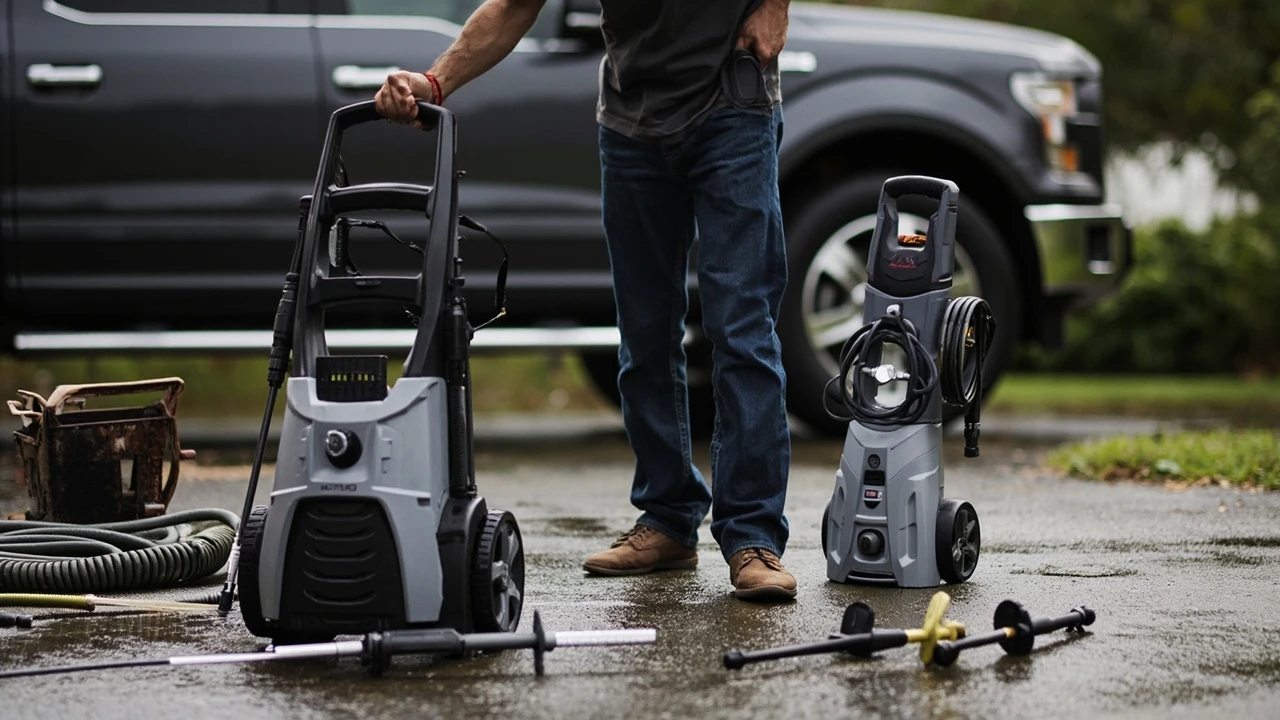
How to choose the best power washer for the jobs you actually have
A pressure washer is one of the few tools that earns a permanent spot in a garage after a single weekend of use. The problem is not whether to buy one. The problem is that the model that strips algae off a concrete driveway in ten minutes is the same one that can scar the paint on a family sedan, etch cedar siding, or push water behind window trim. Choosing the best power washer is less about chasing the highest PSI number on the box and more about matching pressure, flow, and hardware to the surfaces you actually clean at home.
This guide walks through the decisions that matter before you spend money: how much pressure you need for which jobs, the difference between electric and gas units, what GPM does that PSI alone cannot do, nozzle choices that quietly ruin finishes, and the small accessories that separate a frustrating tool from one you will actually reach for. It is written for a homeowner who wants the right tool the first time, not the most expensive one.
Why PSI alone is a misleading way to shop
Most buying guides open with PSI, and most marketing copy leans on the same number. PSI, or pounds per square inch, describes the impact force of the water hitting a surface. It is a real and important specification, but it is only half of the cleaning equation. Two units that list the same 2,000 PSI can clean very differently because of how much water they move, how steady the pressure is at the nozzle, and the quality of the pump inside.
Car and Driver’s recent hands-on test of popular washers made the point clearly. The team recorded max PSI on a gauge rather than trusting the box, and the gap between claimed and measured output was often large. A cordless unit rated at 800 PSI delivered closer to 450 PSI on the gauge. A 3,000-PSI gas machine held close to its claim. A 3,000-PSI electric model measured around 2,600 PSI. The lesson is not that any brand lies. The lesson is that advertised PSI is a ceiling, not a guarantee, and you should pair the number with the test methodology that produced it.
What GPM does that PSI cannot
GPM, or gallons per minute, is the volume of water the pump pushes through the nozzle. It is the silent partner of PSI and the reason a lower-PSI unit can still feel effective on a dirty surface. Higher GPM means more water is sweeping the dirt away instead of relying purely on impact to blast it off. For most homeowner jobs, a balanced combination matters more than maxing either number alone.
A practical rule of thumb used by contractors is to multiply PSI by GPM and look at the resulting “cleaning units.” A unit that produces 2,000 PSI at 1.4 GPM is not the same tool as one that produces 1,800 PSI at 2.0 GPM, even though the first number is higher. The second unit will usually feel faster and more forgiving on large flat areas like driveways and concrete patios. None of this means you should ignore PSI, especially for tough jobs like oil stains or mildew on porous concrete, but it does mean GPM deserves a real place in the comparison.
Electric vs gas: the real tradeoffs
Electric pressure washers have closed the gap on raw pressure over the last several years, but they are not interchangeable with gas units. The choice is about where the tool will live and what you expect to clean.
- Electric units are quieter, lighter, and start with the press of a button. They are also easier to store in a garage or shed because there is no fuel to manage. Most homeowner-grade electric machines sit in the 1,500 to 2,200 PSI range, which is plenty for cars, patio furniture, vinyl siding, and most concrete cleaning.
- Gas units deliver higher pressure, higher flow, and unlimited runtime as long as you have fuel. They are also louder, heavier, and require oil, fuel stabilizer, and occasional carburetor care. For a homeowner with a long gravel driveway, a mildew-covered deck, or a rural property, a gas unit can be worth the maintenance.
- Battery-powered or cordless washers are the newest category. They trade pressure for portability and are best understood as a convenience tool for quick rinses, small vehicles, and bikes, rather than a replacement for a full weekend cleaning session.
Most homeowners do best with a mid-range electric model that has enough power for cars and most outdoor surfaces, plus a long enough hose and a stable wheeled base to be useful around the house. Gas becomes the better answer only when there is a clear outdoor job that electric cannot handle, such as heavy concrete restoration or stripping old paint from a large fence.
Pressure ranges and what they are actually good for
Pressure ratings are a shorthand for what the tool can safely do, and a good buyer uses them as a guardrail rather than a target. Going well over the right pressure for a surface is one of the fastest ways to cause damage. The table below summarizes the ranges that match common homeowner jobs.
| Pressure range | Best for | Common risks if exceeded |
|---|---|---|
| Under 1,500 PSI | Bicycles, patio furniture, light car rinsing, garden tools | Generally safe on most surfaces, but may not shift dried mud or mildew |
| 1,500 to 1,800 PSI | Cars, trucks, vinyl siding, wood decks with a wide tip, window screens at a distance | Can still etch soft paint if held too close or with too narrow a tip |
| 2,000 to 2,500 PSI | Concrete driveways, brick patios, heavy mildew, boats with proper distance | Can scar wood, damage window seals, and gouge asphalt if misused |
| 2,800 PSI and above | Oil stains on concrete, paint stripping, commercial cleaning | Easily damages siding, vehicles, soft stone, and human skin; not a homeowner daily driver |
The same source that measured the Craftsman CMEPW2100 at a car-friendly pressure also called out the 3,000-PSI gas unit as too aggressive for vehicle paint and a poor match for cars, even though it dominated on raw output. That is a useful reminder that more pressure is not the same as better.
Driveway, deck, siding, and car: matching the tool to the surface
Walk around the property before you buy. A short mental list of the jobs you expect to do is worth more than any single spec sheet. The right answer for a homeowner with a two-car driveway, a cedar deck, and a daily driver is almost always a mid-range electric washer with a good selection of nozzles and a decent hose, not a contractor-grade gas unit.
- Concrete driveway and sidewalk stains: Look for at least 2,000 PSI and a turbo or 15-degree nozzle. Pre-treat oil spots with a degreaser so the washer does the rinsing work, not all of the cutting.
- Wood deck: Pressure is the enemy of softwood fibers. Stay in the 1,500 PSI range, use a 25- or 40-degree tip, and keep the nozzle at least 12 inches off the boards. A fan tip and patience beat raw power every time.
- Vinyl or aluminum siding: Wash from the bottom up to avoid streaking and rinse from the top down. Stay under 2,000 PSI and avoid spraying directly into window trim, soffit vents, or light fixtures.
- Cars and trucks: Use the widest tip the unit provides, keep at least 12 to 18 inches of distance, and never use a 0-degree or turbo tip on paint. A foam cannon attachment is a nice upgrade if the model supports it.
If you only need to clean a car, a small electric unit that delivers reliable pressure in the 1,500 to 1,800 PSI range is genuinely enough. If you have a long concrete driveway and plan to clean it every spring, a heavier electric or a compact gas unit will save hours of scrubbing.
Pump type and what it tells you about longevity
The pump is the part of a pressure washer that decides whether the tool lasts a few seasons or a decade. Two families dominate the homeowner market.
- Wobble-plate pumps are common in budget electric units. They are light and inexpensive to manufacture but run hotter and wear faster under heavy use. For light weekend duty, they are usually fine.
- Axial cam pumps and triplex pumps show up in mid-range and commercial machines. They run cooler, last longer, and tolerate longer duty cycles. The trade-off is weight and cost.
There is no public spec sheet that always labels the pump, but the weight of the unit is a rough proxy. Two machines with the same PSI and a five-pound difference in weight usually reflect a different pump inside. Heavier is not always better, but a very light electric unit on a high-PSI claim is a signal to check reviews for reports of pump failure after a season or two.
Nozzles, wands, and the hardware that quietly matters
Nozzles are usually color-coded, and the colors are worth memorizing because they are the difference between a clean surface and a damaged one.
| Nozzle color | Spray angle | Common use | Caution |
|---|---|---|---|
| Red | 0 degrees | Stubborn concrete stains, metal prep | Will damage paint, wood, and skin; never use on vehicles |
| Yellow | 15 degrees | Heavy dirt on hard surfaces | Still aggressive; keep distance from softer materials |
| Green | 25 degrees | General cleaning of concrete and brick | A safe everyday choice for outdoor hard surfaces |
| White | 40 degrees | Vehicle washing, siding, decks | Widest fan; safest on paint and soft materials |
| Black | Soap | Detergent application | Low pressure; do not use for rinsing |
A unit that ships with all five tips is more useful than a unit with two, because the right tip for the job usually exists in the box. Quick-connect wands also make a real difference in daily use. Swapping a tip should take a few seconds, not a trip to the workbench.
Hose length, wheels, and storage
The small things decide whether a tool gets used or left in the corner. A high-PSI machine with a 20-foot hose is a hassle on a long driveway, because you spend half the time moving the unit and untangling the hose. Twenty-five feet is a comfortable minimum for most driveways, and 35 feet is welcome if the outdoor faucet is far from the work area.
- Wheels and a handle: Wheeled carts make a heavier unit manageable. Pneumatic tires roll better on rough concrete than hard plastic wheels.
- On-board storage: Look for a unit that has a place for the nozzles, the wand, and ideally the hose. It is the difference between a tidy garage and a tangled pile of gear.
- Cord management: For electric units, a built-in cord hook prevents the cable from tangling around the hose and keeps the plug out of standing water.
The quiet, leak-free units that reviewers tend to recommend all share a few of these touches. A removable plastic organizer for cords and nozzles was one of the upgrades that turned a previously leaky machine into a usable tool in the recent Car and Driver round-up of the Chemical Guys PM2000. The pump stayed the same, but the day-to-day experience improved noticeably.
Detergents, soap tanks, and foam cannons
Detergent does a lot of the actual cleaning, especially on vehicles. Most electric units include a siphon tube that draws soap from a bucket or a small onboard tank. A siphon tube is more flexible because you can use any compatible soap, but a built-in tank is more convenient for short jobs.
Foam cannons are a popular upgrade among car owners. They attach to the wand and lay a thick blanket of foam on the vehicle, which loosens dirt before you ever touch the paint with a mitt. Foam cannons are a sensible add-on if you wash a car weekly, but they are not necessary for the occasional weekend detail.
Whatever soap you use, match it to the surface. Automotive soap is pH-balanced for paint. Deck and siding cleaners often contain bleach or oxygenated formulas that should never sit on a car’s clear coat. Mixing the two is a common source of dull spots and water spots after a wash.
Safety basics that prevent the most common injuries
A pressure washer is not a hose with ambition. The water leaving the nozzle can lacerate skin and inject debris deep into a wound. A few habits keep the tool safe to use around the house.
- Wear safety glasses. Even a small stone kicked up by the spray can cause a real eye injury.
- Never point the wand at a person, a pet, or yourself, even when the unit is off. Residual pressure can still fire a short burst.
- Keep both hands on the wand. The kickback when you pull the trigger on a high-PSI unit is enough to throw an off-balance user off a step.
- Do not use a gasoline-powered washer in a closed garage. Carbon monoxide accumulates faster than most people expect.
- Do not use an electric unit with a frayed cord or a wet extension connection. A GFCI-protected outlet is a real safety upgrade, not a nice-to-have.
Comparing the categories at a glance
The table below pulls the categories together for a side-by-side look. It is meant to anchor expectations before you start comparing specific models.
| Category | Typical PSI | Weight | Best suited for | Tradeoffs |
|---|---|---|---|---|
| Compact electric | 1,300 to 1,700 | 15 to 25 lb | Cars, patio furniture, light outdoor use, small storage spaces | Limited reach, small pump, fewer nozzles |
| Mid-range electric | 1,800 to 2,200 | 25 to 40 lb | Driveways, decks, siding, frequent car washing | Heavier, needs a GFCI outlet and a long hose |
| Heavy electric | 2,300 to 3,000 | 40 to 60 lb | Larger driveways, mildew-heavy siding, light commercial work | Too aggressive for cars without distance and care |
| Compact gas | 2,500 to 3,000 | 60 to 90 lb | Long driveways, paint prep, rural properties | Noise, fuel and oil maintenance, harder to start |
| Cordless | 300 to 800 | 10 to 20 lb | Quick rinses, bikes, camping gear, small patios | Limited runtime, low pressure, frequent battery swaps |
For most households, the second row of that table is the right answer. A mid-range electric unit that delivers 1,800 to 2,200 PSI, a 25-foot hose, and a useful set of nozzles covers roughly 80 percent of the jobs that show up on a Saturday morning.
Common buying mistakes to avoid
Most pressure-washer regrets are predictable. A few patterns come up again and again in owner reviews and in hands-on testing.
- Chasing the highest PSI. Extra pressure you do not need turns into extra damage to softer surfaces and extra fatigue during use.
- Ignoring weight and hose length. A powerful unit you do not want to drag out of the garage is a powerful unit that gathers dust.
- Skipping the nozzle set. Two tips on a budget unit is a tax on every job you will ever do. Five tips with quick-connect wands are worth the small price difference.
- Underestimating noise. Gas units are loud in a way that affects neighbors. Electric units are quieter, but the loudest electric models are still unpleasant for long sessions.
- Buying a cordless model for driveway work. The runtime math does not work. Cordless washers are a convenience tool, not a replacement for a corded unit on larger jobs.
The recent hands-on comparison of pressure washers on Car and Driver’s car-accessory list surfaced several of the same patterns. The Craftsman CMEPW1700 earned praise for being a clean, simple, portable electric unit, but it shipped with only two tips. The Sun Joe SPX3000 had a generous tip set and friendly price, but it was not powerful enough to back up its best-seller status on bigger jobs. The right tool is rarely the one with the loudest marketing.
A simple decision checklist before you buy
If the previous sections felt like a lot of detail, this short list is a way to translate the article into a single buying decision. Walk through it in order and the right model tends to identify itself.
- List the three jobs you expect to do most often. Car, deck, and driveway is a common trio.
- Note the longest distance from your outdoor faucet to the work area. Add ten feet of slack and pick a hose that meets or exceeds that length.
- Decide whether the unit will run on a 120-volt outlet near the work area. If not, plan on gas or a long, heavy-gauge extension cord.
- Pick a pressure range that covers the hardest job on your list. For a car, stay at or below 1,800 PSI. For a concrete driveway, plan on 2,000 PSI and a turbo tip.
- Choose a unit that ships with at least four nozzles and a quick-connect wand. The small cost difference pays back every time you change tasks.
- Read at least one long-term owner review for the model you are considering. Pump failures show up there long before they appear on a spec sheet.
Care and storage so the tool keeps working
A pressure washer that sits through a winter with water in the pump is a pressure washer that does not start in the spring. A few minutes of end-of-season care are the difference between a five-year tool and a one-year tool.
- Drain the pump after each use. Most units have a siphon mode that pulls antifreeze or pump saver through the system in under a minute.
- For gas units, run the tank dry or add fuel stabilizer before storage. Old fuel is the most common reason a gas washer will not start after winter.
- Store the unit in a dry, sheltered space. Even a basic cover keeps rain and debris off the motor and pump.
- Inspect the high-pressure hose for kinks and bulges once a season. A bulging hose is a hose that is about to burst and should be replaced.
- Clean the inlet filter on the garden hose side. A clogged filter makes the pump work harder and shortens its life.
Final reminders before you click buy
Pressure washers are one of the rare tools where the best model really depends on the user. The right answer for a one-car apartment owner with a small patio is a compact 1,500-PSI electric unit with a foam cannon attachment. The right answer for a homeowner with a 60-foot driveway, a cedar deck, and a half-acre yard is a heavier 2,000 to 2,200 PSI electric unit with a long hose and a full nozzle set. The right answer for a property manager with multiple rentals is a gas unit with a triplex pump.
If you remember nothing else from this guide, match pressure to the surface, not to the marketing copy. Pay attention to GPM and pump quality, not just PSI. And buy the unit you will actually pull out of the garage, because a tool that stays in the corner is more expensive than the cheapest one on the shelf.
Frequently asked questions
What PSI do I need to wash a car safely?
Stay at or below about 1,800 PSI for washing a car, and use the widest nozzle available, usually the white 40-degree tip. Keep the nozzle at least 12 to 18 inches from the paint. Higher pressure is possible with distance and care, but anything above 2,000 PSI risks etching the clear coat if held too close or used with a narrow tip.
Is an electric pressure washer powerful enough for a concrete driveway?
For most driveways, yes. A mid-range electric unit in the 2,000 to 2,200 PSI range, paired with a 15-degree or turbo nozzle, will clean oil spots, mildew, and general grime from concrete. Pre-treat stains with a degreaser and let it sit for several minutes so the washer does the rinsing work rather than all the cutting.
What is the difference between PSI and GPM in a pressure washer?
PSI is the impact force of the water, and GPM is the volume of water delivered per minute. PSI breaks dirt loose, and GPM carries it away. A balanced combination of both is more useful than maxing either number alone. Two units with the same PSI but different GPM ratings will feel different in real use.
Are gas pressure washers worth the extra maintenance?
For a homeowner with frequent heavy use, a long driveway, or paint-stripping jobs, yes. Gas units deliver higher pressure and unlimited runtime, at the cost of noise, fuel, oil, and seasonal carburetor care. For typical weekend cleaning, an electric unit is quieter, lighter, and far easier to live with.
Can a pressure washer damage vinyl siding or a wood deck?
Yes, and it is one of the most common homeowner mistakes. Vinyl siding can be forced behind the panels, and softwood decks can be furrowed by a narrow tip held too close. Use a 25- or 40-degree nozzle, keep the wand moving, and stay under about 2,000 PSI on either surface.
How long should the high-pressure hose be?
For most driveways and patios, 25 feet is a comfortable minimum, and 35 feet is welcome if the outdoor faucet is far from the work area. A short hose forces you to move the unit constantly, which wears out the pump and slows the job.
What is a turbo nozzle, and do I need one?
A turbo nozzle combines a 0-degree stream with a rotating head, which gives you the cutting power of a red tip with the coverage of a wider fan. It is useful for stubborn concrete stains and for stripping old finishes from hard surfaces. Skip it for cars, siding, and wood, where a regular 25- or 40-degree tip is the safer choice.
Do I need a separate foam cannon for car washing?
No, but it makes the job easier and safer for the paint. A foam cannon lays a thick blanket of soap across the vehicle, which lifts grit before you touch the surface with a mitt. If you wash your car weekly, a foam cannon is a worthwhile add-on. For occasional washes, a siphon tube and a regular soap nozzle are enough.
How do I store a pressure washer through the winter?
Drain the pump after the last use, either by running the unit dry or by pulling pump-saver fluid through the system. For gas units, either drain the fuel or add a fuel stabilizer. Store the unit in a dry, sheltered space, and inspect the high-pressure hose for kinks or bulges before the next season.
What safety gear should I wear when using a pressure washer?
At minimum, wear safety glasses to protect against flying debris, and closed-toe shoes with good grip. Long pants help, especially when working on concrete. Avoid loose clothing near the wand, and never point the spray at a person, a pet, or yourself, even when the trigger is released and the unit is off.
Leave a Reply