
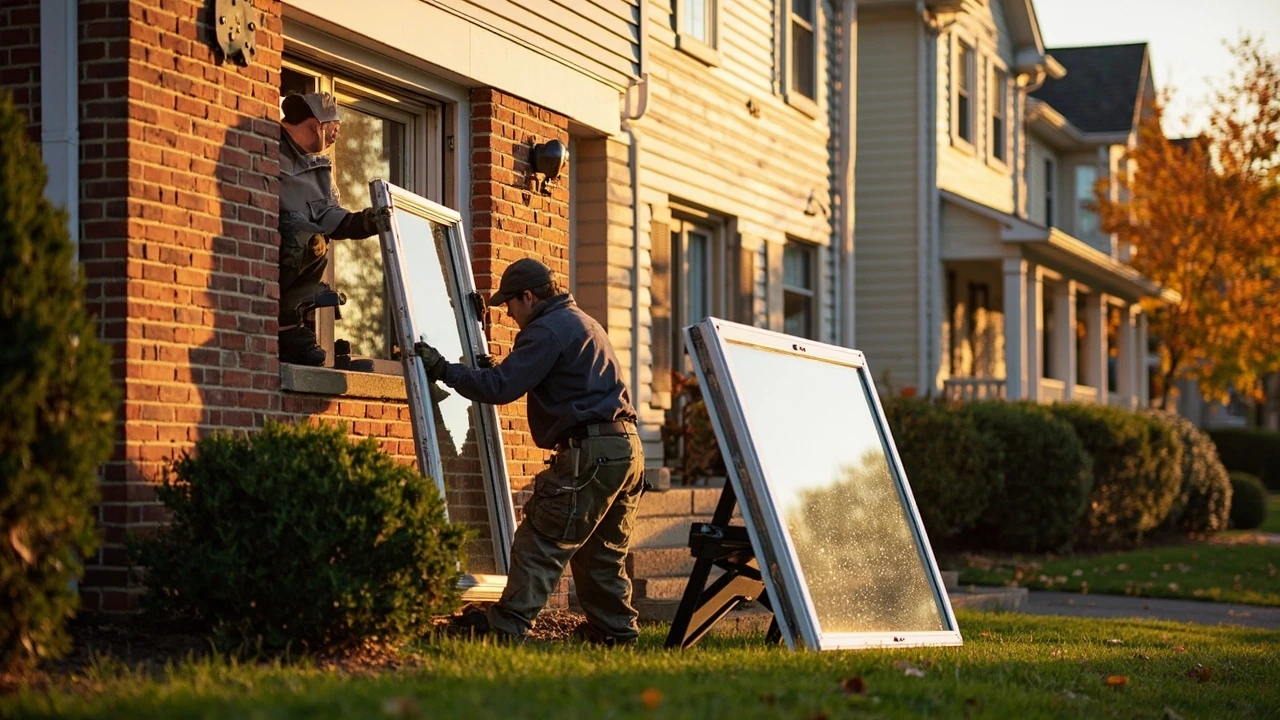
Window replacement in Falls Church, VA: what homeowners actually need to know
Most homeowners in Falls Church, VA start thinking about window replacement when one window finally fails, a draft wakes them up in January, or a power bill lands and the numbers no longer make sense. That is the right moment to step back, because the best project is rarely the one that swaps a single broken pane. The windows on a typical 1960s-era brick colonial in this part of Northern Virginia are usually a matched set, and they tend to fail within a few years of each other. Treating the project as a planned system, rather than a one-off repair, is what separates a smooth installation from a long string of callbacks.
This guide walks through how to think about window replacement falls church va in practical terms. It covers what to expect from the local climate, which frame and glass options actually matter, how installers estimate and price the work, and which questions to ask before signing a contract. The goal is to help a Falls Church homeowner make a confident decision, not to push a particular brand or product line.
Why Falls Church homes are a special case for window replacement
Falls Church sits in a climate zone that punishes windows from both sides. Summers are hot and humid, with outdoor dew points that regularly push into the 70s. Winters are cold enough that frost forms on the inside of single-pane glass several days a year. The housing stock in the area is also mixed: original 1940s cottages near the W&OD trail, 1960s split-levels in Pimmit Hills, and 1990s colonials in the newer subdivisions all coexist within a few miles. Each of these eras has a different original window design, and that shapes the replacement approach.
Local building codes follow the Virginia Uniform Statewide Building Code, which is based on the International Residential Code. Energy code requirements for replacement windows are tied to the climate zone and the air conditioner or furnace in the home, not the size of the window. That distinction matters because a code-minimum window is not the same window as an Energy Star rated window for this region, and a code-minimum window is rarely the best value for an older, leaky house.
Common signs that it is time to replace, not repair
There is a point where patching a window is more expensive than replacing it. The most common signals homeowners in Falls Church notice include:
- Condensation between the panes of an insulated glass unit, which means the seal has failed.
- Soft, cracked, or peeling wood on the sill or the lower rails of double-hung sashes.
- Visible daylight around the frame interior when the window is closed.
- A room that never reaches the temperature the thermostat is set to, even after the HVAC service.
- Outside noise that is loud enough to interrupt conversation at normal speaking volume.
- Drafts that return within days of weatherstripping or caulking.
Any one of these can be addressed on its own, but if two or three are present, full replacement is usually the cheaper path over a five-year window.
Frame materials: a side-by-side comparison
The frame is the structural decision that drives both the price and the long-term performance of the window. For most homes in this market, four frame families are realistic options.
| Frame material | Typical cost per window installed | Best fit in Falls Church | Maintenance | Expected service life |
|---|---|---|---|---|
| Vinyl | Lower to mid range | Most 1960s to 1990s homes looking for energy efficiency on a budget | Wash with mild soap; no painting | 20 to 30 years |
| Fiberglass | Mid to upper range | Historic or character homes that need slimmer profiles and stronger frames | Very low; can be repainted | 30 to 40 years |
| Wood with aluminum or vinyl cladding | Upper range | Older homes in the City of Falls Church and Bellevue Forest that want a traditional look | Inspect cladding yearly; repaint exterior wood every 8 to 12 years | 30+ years with care |
| Aluminum | Lower range, but rarely used in full replacement today | Limited, mostly for commercial or apartment applications | Low, but conducts heat and cold | 20 to 25 years |
Vinyl is the most common choice for the workhorse replacement market in the area because the price-to-performance ratio is hard to beat. Fiberglass is worth the upgrade when the home has large window openings or when the homeowner wants slimmer sightlines that mimic the original wood windows. Clad wood is the right pick when the goal is to match the look of a 1950s bungalow or a 1970s contemporary, but it costs more and requires more attention over time.
Glass packages: what to look for beyond the label
Once the frame material is decided, the glass is where the actual energy performance lives. Two windows with the same frame can have very different real-world results because the glass package is different. The most important ratings, all of which should appear on a National Fenestration Rating Council label, are:
- U-factor: how much heat passes through. Lower is better. In this climate, target a U-factor at or below 0.30 for the whole window.
- Solar heat gain coefficient (SHGC): how much solar heat the window lets in. In Falls Church, a SHGC around 0.30 to 0.40 is a sensible target for south- and west-facing glass to keep summer heat gain in check.
- Air leakage: how much air sneaks through the frame at a given pressure difference. Look for 0.3 cubic feet per minute or lower.
- Visible transmittance: how much visible light passes. Higher numbers mean brighter rooms.
- Condensation resistance: how well the window resists interior condensation in cold weather. Higher is better in winter.
For most homes in the area, double-pane glass with one low-e coating and an argon fill is the practical baseline. Triple-pane glass is available and reduces noise significantly, but the incremental cost is rarely justified unless the home sits directly along a major arterial like Route 7 or Route 50, or the homeowner is chasing a specific sound target.
Installation details that change how the window performs
Most installation problems show up in the first two years, and almost all of them are tied to how the rough opening was prepared and how the window was sealed to the house. A few details separate a careful installer from a quick one.
- The old window and surrounding trim come out cleanly, with the sheathing and framing exposed for inspection.
- Any soft or rotted wood is replaced before the new window goes in, not buried behind trim.
- Shims are placed under the sill and behind the side jambs so the window is plumb, level, and square, not “close enough”.
- The sill pan or pre-formed flashing at the bottom directs any water that gets behind the cladding back to the exterior.
- Spray foam or low-expansion foam is used between the frame and the rough opening, not fiberglass batts stuffed into the gap.
- Flashing tape or a peel-and-stick membrane covers the nailing fin or flange, lapped shingle-style from the bottom up.
None of these steps are exotic. They are the same steps a careful framing crew uses on a new build. The reason they matter so much on a replacement is that older homes in the area were rarely built with a continuous water-resistive barrier behind the siding. If the installer does not recreate that barrier at each opening, the new window can collect wind-driven rain in the wall cavity, and the damage will be invisible until the paint peels or the drywall stains.
How local installers typically estimate a project
The pricing structure for window replacement in Falls Church, VA usually follows one of two paths. Some companies price per opening with a base number that includes a standard-sized double-hung or casement, then add for sizes, shapes, grids, or upgraded glass. Others price per project, where the estimator walks the home, counts each opening, and writes a single line on the contract.
Either way, the estimate should clearly separate four things:
- The windows themselves, by tag or label.
- Installation labor and materials, including trim and interior finishing.
- Disposal of the old windows and any debris.
- Any repair work, such as replacing rotted sills, that is only discovered after the old window comes out.
When these four are bundled into a single number, the homeowner loses the ability to compare bids. A typical whole-house replacement in this market lands somewhere in the low to mid five figures for a two-story home with fifteen to twenty openings, but the range is wide. The safest way to compare two bids is to look at the per-window price for an apples-to-apples opening, and then add the project-wide items on top.
Working in the City of Falls Church versus Fairfax County
Falls Church is a small independent city, surrounded on most sides by Fairfax County, and a small number of homes are actually in Arlington County. The City of Falls Church and Fairfax County each maintain their own permitting processes, and the requirements for window replacement are not identical. In most cases, a like-for-like replacement that does not change the size of the opening is treated as ordinary maintenance and does not require a building permit. The moment a project enlarges a rough opening, changes a window to a door, or alters the exterior appearance in a way that the local historic district office cares about, the rules change.
Most local contractors handle this distinction without much fuss because they pull permits in both jurisdictions every week. For a homeowner, the practical takeaway is to ask the installer whether the project requires a permit for the specific address, and to confirm that the contract includes permit fees if a permit is required.
Timelines and what the day of install actually looks like
A well-run project for a single-story home with eight to ten openings usually takes one to two days, start to finish. A two-story home with larger or harder-to-reach windows can take two to four days. The crew will usually arrive between 7:30 and 8:30 in the morning, set up drop cloths inside and a designated work area outside, and start with the windows on the side of the house that gets the most sun so the interior exposure is shortest.
A few things to plan for around the install:
- Window coverings, curtains, and blinds need to come down ahead of time.
- Furniture within about three feet of each window should be moved to the center of the room.
- Alarms or sensors mounted on the frame need to be removed and reinstalled, which is sometimes an extra line item.
- Pets do poorly with the noise of removal, so it is worth planning a quiet room or a daycare day.
- Access to at least one exterior outlet and a clear path to the driveway or street for the crew vehicle speeds the day up.
The most common complaint after the crew leaves is not a bad window, it is dust. Sawing trim, drilling fasteners, and pulling old caulk all create fine debris that finds its way into nearby rooms. A good crew will hang plastic and run a vacuum, but a homeowner who covers the surrounding furniture and electronics with a sheet the night before ends up with less cleanup to do.
How to evaluate a quote without becoming a window expert
Most homeowners do not want to read a 40-page product specification. A simpler way to compare two quotes is to look at four specific lines on each one.
| Line on the quote | What to verify | Why it matters |
|---|---|---|
| Window model and tag | Same brand, same series, same options on both quotes | Cheaper quotes sometimes drop a low-e coating or substitute a thinner frame without saying so |
| U-factor and SHGC | Match the climate-zone target discussed earlier | Confirms the glass is actually rated for this region, not just labeled “energy efficient” |
| Installation method | Full-frame replacement vs. insert replacement | Insert is faster and cheaper, but hides damage; full-frame is the right call on a tired home |
| Warranty terms | Length, what is covered, and whether labor is included | A lifetime glass warranty that does not include labor is much less valuable than it sounds |
If two quotes match on those four lines and the price difference is more than 15 percent, it is worth asking why. The honest answer is usually that one crew is busier than the other, or one is including scope the other is not. The dishonest answer is sometimes that the cheaper bid is using a lower-rated product behind a similar-sounding name.
Common pitfalls during a window replacement project
Most problems are avoidable if the homeowner knows to ask about them before signing. A few of the ones that come up most often in this region:
- Sizes are measured too tightly. The rough opening has to allow for shimming and insulation. A window that is “exact” in the field almost never installs cleanly.
- Old aluminum or steel windows are removed but the new unit is sized to the old interior stop. The exterior trim ends up too narrow and the siding gap shows.
- Custom shapes are quoted from a sketch, not a field measure. Half-rounds, eyebrows, and trapezoids need a site visit before pricing.
- Interior trim is promised but not specified. “We will re-trim” is not the same as “we will replace the apron, stool, and casing in primed finger-jointed pine to match the existing profile.”
- Lead paint and asbestos in older homes are brushed off. Any home built before 1978 may have lead paint on the original sashes. Crews that disturb it should follow EPA RRP practices. Homes from before the mid-1980s can have asbestos in old caulk or glazing putty, which a careful installer will test for or work around.
Energy savings: honest expectations
It is fair to expect real energy savings from a window replacement, but the size of the savings depends on what is being replaced. A home that goes from original single-pane aluminum windows to a modern double-pane low-e unit can see heating and cooling costs drop by 10 to 25 percent. A home that goes from older double-pane wood windows to a newer double-pane vinyl unit usually sees a smaller drop, often in the single digits.
Two other factors matter more than the window itself: how leaky the home is overall, and how the HVAC system is sized. Drafts around the front door, an uninsulated attic hatch, and a missing weatherstrip on the attic access stair will usually eat more energy than a window upgrade. The most efficient approach is to address the building envelope as a system, with windows as one piece of a larger plan rather than the only piece.
When historic district rules apply
Parts of Falls Church, including the Historic District and certain corridors in Fairfax County near the city line, have design review requirements that govern exterior changes visible from the street. Window replacement in those areas usually requires pre-approval for changes to frame material, muntin pattern, exterior color, and trim profile.
For homeowners in those areas, the practical sequence is to confirm the design review requirements first, then build a window specification that meets the standard, and only then collect bids. Reversing the order means risking a window order that has to be returned or modified at the homeowner’s expense.
How long the new windows should last
Service life is partly a function of the product, but it is also a function of how the home is maintained. A reasonable expectation for the four common frame materials was noted in the table earlier, but a few usage factors push that range up or down:
- South- and west-facing windows fade and degrade faster than north-facing windows in this region.
- Homes within a mile of a busy road collect more fine particulates on exterior seals.
- Irrigation spray that hits the sill shortens wood and even some vinyl component life.
- Power-washing too close to the seals can blow them out in a single season.
Choosing an installer in Falls Church, VA
Plenty of contractors in the area do this work well. A few habits separate the consistent ones from the rest:
- They measure every opening in person before writing a contract, not from a satellite image or a square-footage estimate.
- They give a written scope that names the manufacturer, the series, and the glass package.
- They carry both general liability insurance and workers’ compensation, and they will name the homeowner as a certificate holder on request.
- They have references within a 20-minute drive of the project address and will share a recent one.
- They do not require a deposit larger than 30 percent for a project scheduled more than four weeks out.
A quick way to test an installer is to ask how they handle rotted sills when they find one. If the answer is “we will show you and tell you before we replace it,” the crew is being honest about how the work unfolds on an older home. If the answer is “we will just take care of it,” the homeowner is not going to see the change order before the bill.
Frequently asked questions
How long does a typical window replacement take in a Falls Church home?
For a single-story home with eight to ten openings, most local crews finish in one to two days. A two-story home with larger or harder-to-reach windows usually takes two to four days, and projects with custom shapes or extensive trim work can stretch to a week.
Do I need a building permit to replace windows in Falls Church, VA?
Like-for-like replacements that do not change the size of the opening are generally treated as ordinary maintenance in both the City of Falls Church and Fairfax County, and no permit is required. Projects that enlarge an opening, convert a window to a door, or change the exterior appearance in a designated historic district do require permits and, in some cases, design review approval.
What is the most energy-efficient window for this climate?
A double-pane insulated glass unit with a low-emissivity coating, an argon gas fill, a warm-edge spacer, a U-factor at or below 0.30, and a solar heat gain coefficient around 0.30 to 0.40 will perform well in the Falls Church climate. Triple-pane glass is useful in noisy locations but is rarely worth the premium in a quiet suburban setting.
How much does window replacement cost per window in this area?
Per-window pricing depends on the frame material, the glass package, and the size of the opening. Vinyl units in standard sizes typically land at the lower end of the range, while fiberglass and clad-wood units in larger or custom sizes land higher. A whole-house project for a typical two-story home often lands in the low to mid five figures, with the exact number depending on the count and the scope of trim work.
Should I replace all windows at once or just the failing ones?
Replacing all of them at once is almost always cheaper per window because the crew mobilization, disposal fees, and trim work are spread across more openings. It is also the only way to guarantee a consistent appearance. If budget is the constraint, replacing the worst-performing elevations first and rolling the rest into a future phase is a reasonable plan, but it is worth pricing the full project to see whether the savings from a single mobilization are large enough to do everything at once.
Are there rebates or tax credits available for window replacement in Virginia?
Federal tax credits for energy-efficient window upgrades have appeared in past legislation and have changed in their details over time. Homeowners should confirm the current status with a tax professional before claiming any credit. Utility rebates vary by provider and by year, so it is worth asking the installer or checking the local utility’s website for any active program at the time of purchase.
Can new windows be installed in the winter?
Yes. Vinyl, fiberglass, and clad-wood units can be installed in cold weather with a few extra precautions. The crew will work one opening at a time so the interior is not exposed for long, and spray foam performs normally as long as the can is kept warm. Spring and fall are the busiest seasons, so scheduling is often easier in winter.
How do I know if my home has lead paint or asbestos around the windows?
Homes built before 1978 are likely to have lead-based paint on original wood sashes and trim. Homes built before the mid-1980s can have asbestos in old caulk or glazing compound. A careful installer will either test for these materials before disturbing them or will follow EPA Renovation, Repair, and Painting (RRP) practices that assume the materials are present. Homeowners who are unsure about their own home can request a paint-chip test from a certified inspector.
What is the difference between insert replacement and full-frame replacement?
Insert replacement leaves the original frame in place and fits a new window inside it. It is faster, less invasive, and cheaper, but it slightly reduces the glass area and hides any rot behind the old frame. Full-frame replacement removes the old frame down to the rough opening, which allows the installer to inspect and repair the surrounding wall, and it gives a cleaner result on a tired home. The right choice depends on the condition of the existing frame and the homeowner’s tolerance for interior and exterior disturbance.
How long should a quality window installation last in this region?
A well-installed vinyl window in this climate will typically give 20 to 30 years of service. Fiberglass and clad-wood units, when maintained, can reach 30 to 40 years. The largest variable is not the product itself but the care of the seal between the window and the wall, which is why the installation details covered earlier matter as much as the brand on the box.
Leave a Reply